

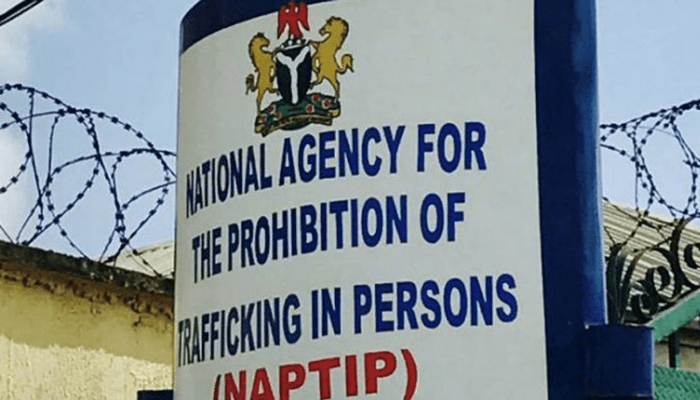
The National Agency for the Prohibition of Trafficking in Persons (NAPTIP) has stressed the need for stronger stakeholder collaboration in the fight against human trafficking.
The call followed a reported rise in cases of human trafficking in seven local government areas of Rivers State.
Nwamaka Ikediashi, NAPTIP’s Rivers State Commander, during activities marking the 2026 World Day Against Trafficking in Persons, identified the local government areas to include: Eleme, Tai, Gokana, Emohua, Ahoada East, Ahoada West, and Khana.
She said the Rivers State Government must actively participate in tackling the rising trend of human trafficking.
Ikediashi noted, “The fight against human trafficking is not a fight that NAPTIP can do alone. We have our major stakeholders, security agencies. Here in Rivers State, the government has to be proactive on issues regarding human trafficking.”
She explained that trafficking “is an offence that sometimes is not always in the news, because the victims don’t like publicising certain things. So when handling some of these issues, it’s low-key.”
Ikediashi said, “There’s a rising trend of trafficking, especially in the area of foreign travel to promote sexual exploitation, that’s forced prostitution. It’s very, very common. And in Rivers State, there are some endemic areas, which include: Eleme, Tai, Khana, Gokana, Ahoada East, Ahoada West, Emohua.”
She confirmed that cases of human organ harvesting and forced labour continue to take place in parts of Rivers State.
“When you talk about forms of trafficking, there are external forms of trafficking, there are internal forms of trafficking, but we are concentrating more on the internal form of trafficking,” she said.
Ikediashi said internal forms of trafficking include child labour, sexual exploitation, organ harvesting, buying and selling of persons, and the keeping of under-age persons in brothels and subjecting them to sexual exploitation.
“Not only underage persons, but also vulnerable persons. There are persons that are vulnerable. Maybe they are disabled, or maybe, coming from the background they are coming from, you know that they are vulnerable,” she said.
Ikediashi urged the public to promptly report cases of human trafficking in their areas to the agency.
“The public can join hands in the fight against trafficking. When you see something, you say something. You report cases of human trafficking to NAPTIP. We have a toll-free number, and our lines are always open. So when you see something, you say something. Report every form of human trafficking case to NAPTIP,” she said.
Nigeria is estimated to have around 1.6 million people in modern slavery, according to a 2021 report, and about 1.4 million subjected to forced labour or sexual exploitation in 2023.
Reports also describe sex trafficking, labour trafficking, and “baby factory” cases as leading forms of trafficking in Rivers State and other parts of southern Nigeria.


