

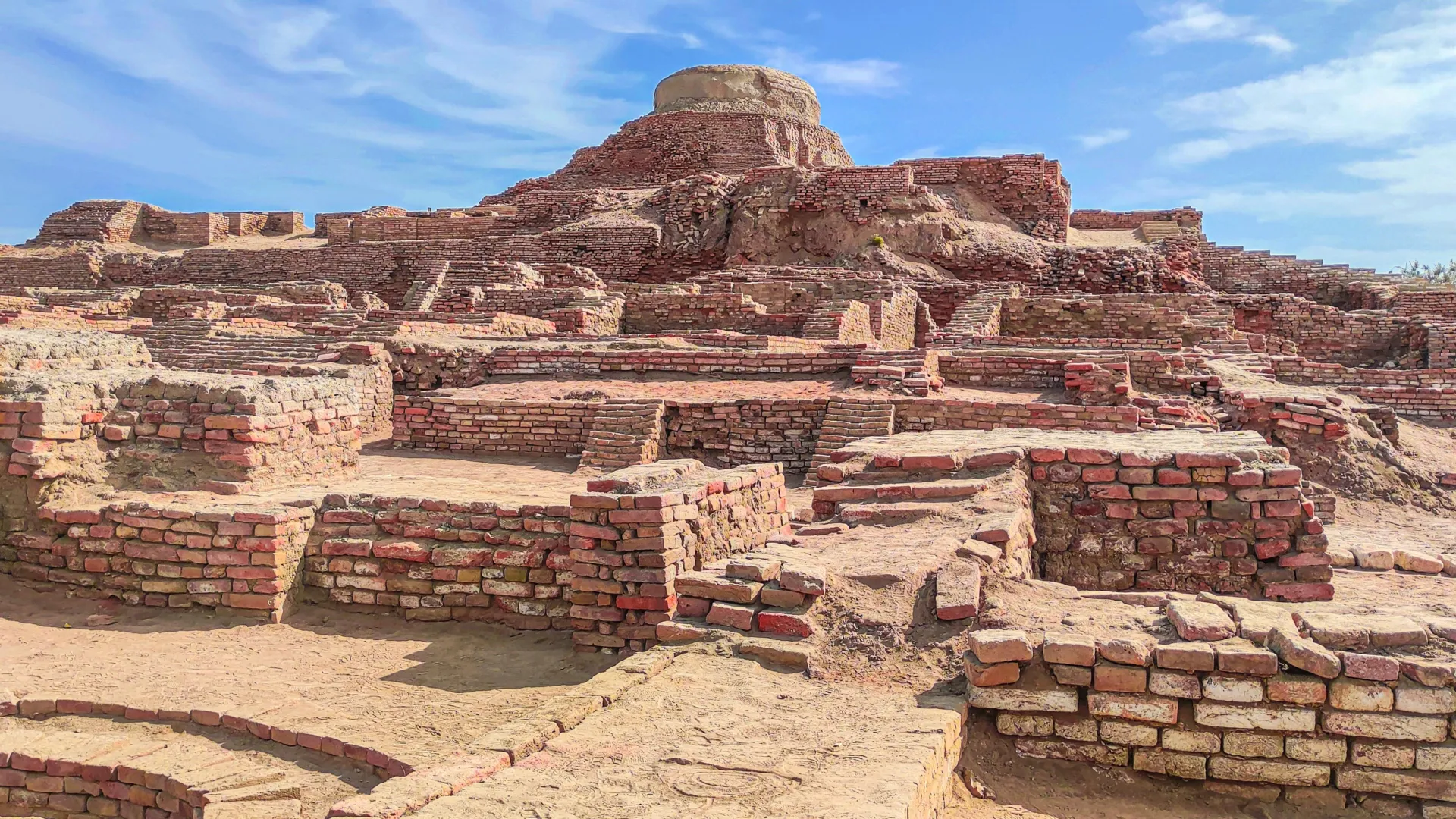
New research suggests that Mohenjo-daro followed a very different path from many other early cities. As the 4,000-year-old urban center became larger, more productive, and more successful, its society appears to have grown more equal rather than less.
Historians have often argued that inequality increased when small farming settlements developed into cities. Under this traditional model, kings, priests, and other powerful leaders gained control of wealth and resources, causing the divide between rich and poor to expand.
An Ancient City That Became More Equal
A University of York study of Mohenjo-daro, the largest city of the Indus civilization, points to the opposite pattern. Researchers examined differences in house sizes across the city and found that wealth became more evenly distributed as Mohenjo-daro matured.
The city also appears to have been more equal than comparable societies in Mesopotamia and Greece. Instead of producing increasingly dramatic differences between wealthy and ordinary households, Mohenjo-daro saw the size gap between its largest and smallest homes become narrower over time.
The lead author, Dr. Adam Green from the University of York’s Department of Archaeology and Department of Environment and Geography, said: “Legacy data from the ancient city shows that as the city matured, the gap between the largest and smallest homes narrowed. In fact, by its later years, the wealth gap in this massive urban center had dropped to levels typical of the first farming villages.
“While ancient Egyptians were building pyramids for god-kings, and the Greeks were constructing massive palaces at Knossos, the people of the Indus were building something entirely different.
“Instead of gold-filled tombs and huge temples, Mohenjo-daro focused on sophisticated brick-lined drains and organized street layouts. Instead of allowing the perks of society to accumulate with a tiny elite, the city’s amenities were widely distributed amongst the everyday households.”
Drains and Streets Instead of Palaces
Mohenjo-daro devoted significant effort to practical features that benefited the wider population. Its carefully planned streets and advanced brick drainage systems indicate that resources were directed toward shared infrastructure rather than monuments celebrating rulers or religious elites.
The distribution of Indus seals offers further evidence of this approach. These seals were important tools for trade and business, yet archaeologists usually find them inside ordinary homes rather than concentrated in public buildings. The city had no known palaces where a ruler or ruling class could have controlled these tools of commerce and administration.
This pattern suggests that wealth and authority were not monopolized by a single powerful leader. Instead, the residents of Mohenjo-daro may have cooperated to give households broad access to the resources needed for a comfortable standard of living.
Shared Infrastructure and Fair Trade
Continued investment in drainage, road upkeep, and other public services also reflects collective support for the city’s everyday needs. These projects improved life across Mohenjo-daro rather than primarily serving a small group at the top of society.
A standardized system of weights and measures used throughout the region may have supported fairer trade as well. By giving merchants and residents a common way to measure goods, the system helped make exchanges more consistent for everyone.
Published in the journal Antiquity, the findings challenge the belief that greater inequality must accompany economic growth. Researchers argue that Mohenjo-daro demonstrates how a technologically advanced and highly productive society could distribute prosperity broadly instead of allowing it to accumulate among a small elite.
A Lesson From the Indus Civilization
Dr. Green said: “Mohenjo-daro is often cited as being famous for what it doesn’t have, such as the absence of palaces for kings, gold-filled tombs, and no statues of rulers. But what it does have is so important.
“In the period when inequality appears to be lowest, productivity appears to rise. It challenges the idea that prosperity requires us to concentrate decision-making powers in the hands of the few.
“It is quite an interesting lesson for modern societies, as the Indus civilization demonstrates clearly that an urban society can be highly productive and inventive at scale, whilst also ensuring that resources and power are shared equitably. In fact, doing so may even have been essential to sustaining prosperity over the centuries.”
