

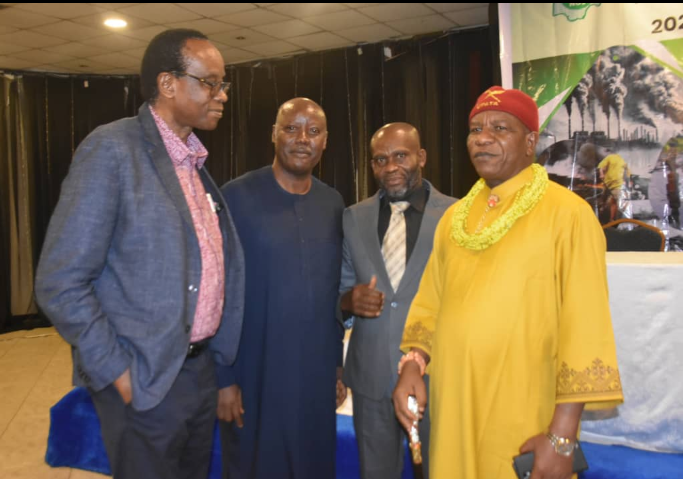
For decades, the Niger Delta has powered Nigeria’s economy, generating the oil wealth that has financed national development. Yet, beneath that prosperity lies a region burdened by polluted rivers, degraded farmlands and disappearing livelihoods. At the 2026 Correspondents’ Week of the Correspondents’ Chapel of the Nigeria Union of Journalists, Rivers State Council, environmental advocates warned that unless urgent remediation is undertaken, the country’s oil-rich heartland risks leaving future generations with a legacy of environmental devastation rather than prosperity. Blessing Ibunge reports
For nearly 70 years, the Niger Delta has fuelled Nigeria’s economy. Its crude oil has financed national budgets, built highways and other infrastructure, serviced public debt, funded political ambitions and sustained Africa’s largest economy.
Yet, while immense wealth flowed from the creeks and swamps of the region into government coffers and corporate balance sheets, many of the communities where the oil originates have been left with polluted rivers, degraded farmlands, contaminated groundwater and shrinking livelihoods.
For many residents, the environmental crisis is no longer measured only by the number of oil spills or gas flare sites. It is reflected in empty fishing nets, infertile farmlands, unsafe drinking water and communities that increasingly struggle to survive in an ecosystem that once sustained generations.
The result, participants argued, is the gradual displacement of people from their traditional means of livelihood, creating what many described as an environmental refugee crisis within Nigeria.
These concerns dominated the 2026 Correspondents’ Week of the Correspondents’ Chapel of the Nigeria Union of Journalists (NUJ), Rivers State Council. Although the event focused on the media’s role in environmental remediation, discussions evolved into a broader conversation on decades of environmental injustice and the urgent need for accountability from both government and oil companies.
When Pollution Becomes Personal
Among the speakers, Executive Director of Kebetkache Women Development Centre, Dr. Emem Okon, brought the human dimension of the crisis into sharp focus.
Drawing from research conducted in oil-producing communities, she recounted the words of a woman from Otuabagi community who described the depth of environmental contamination by saying:
“One of the women in Otuabagi said, ‘If you cut my waist, you will not see blood; you will see crude oil.’”
For Okon, the statement was not simply symbolic. It reflected the fears of communities that have lived for decades amid persistent oil pollution and now worry that contamination has seeped into their bodies, water sources, food systems and future generations.
She lamented that although numerous environmental reports have documented the devastation in the Niger Delta, the findings rarely receive the urgency they deserve from policymakers. According to her, many technical reports remain inaccessible to ordinary citizens, leaving communities without the information needed to demand accountability.
A Region Feeding on Pollution
Environmental advocate Chief Constance Meju argued that the environmental crisis has gone beyond polluted rivers and oil-stained vegetation to infiltrate the region’s food chain.
She warned that fish, shrimps and other seafood consumed across the Niger Delta are increasingly threatened by contamination resulting from decades of oil exploration and spills.
According to her, families who once depended on fishing as a reliable source of income now struggle because aquatic ecosystems have been severely damaged.
Meju recalled a time when fishing sustained households, paid children’s school fees and provided economic independence for thousands of families. Today, she said, many of those opportunities have disappeared, leaving young people without sustainable livelihoods.
She linked the environmental crisis directly to rising poverty, unemployment and insecurity, arguing that the destruction of traditional occupations has contributed to increasing crime across the region. In her view, environmental degradation should no longer be seen merely as an ecological issue but also as an economic and social crisis with significant security implications.
Questions Over Environmental Remediation
A recurring concern throughout the conference was the gap between official claims and realities on the ground.
Meju questioned the effectiveness of cleanup efforts undertaken by multinational oil companies, alleging that several polluted sites declared remediated still showed visible signs of contamination years later.
She cited visits to communities such as K-Dere in Ogoni where residents continue to complain about lingering pollution despite reports that cleanup activities had been completed.
For many host communities, such experiences have fuelled distrust and reinforced concerns that environmental restoration often falls short of what is required to rehabilitate damaged ecosystems. Participants argued that remediation must be properly monitored to ensure that affected communities genuinely benefit rather than being presented with incomplete or cosmetic interventions.
Beyond the Ogoni Cleanup
While acknowledging the significance of the ongoing Ogoni cleanup, Okon maintained that environmental restoration must extend beyond one part of the Niger Delta.
She urged journalists to sustain pressure on government to expand remediation efforts across the entire region, noting that communities in Bayelsa, Rivers, Delta, Akwa Ibom, Edo and Ondo states continue to suffer similar environmental challenges.
Although the United Nations Environment Programme (UNEP) estimated that restoring Ogoniland could take between 25 and 30 years, she argued that other communities should not have to wait for the completion of that process before intervention begins.
According to her, a comprehensive regional approach is necessary if Nigeria hopes to address decades of environmental degradation and restore confidence among host communities.
Time is Running Out
Executive Director of Health of Mother Earth Foundation (HOMEF), Nnimmo Bassey, warned that the global transition away from fossil fuels makes immediate action even more urgent.
“Oil will one day be phased out. Is it when oil is no longer needed that we’re going to find money to clean the Niger Delta? No. If the Niger Delta is not cleaned now while people are still buying oil, then we are sold.”
Bassey argued that the current period may represent the last realistic opportunity to compel governments and oil companies to finance large-scale environmental restoration. Once global demand for crude oil begins to decline significantly, he warned, both the financial incentive and political will to fund remediation could diminish, leaving communities with decades of unresolved environmental liabilities.
His remarks resonated with participants who believe that postponing cleanup efforts will only increase the environmental and economic burden on future generations.
Communities Without a Voice
Beyond the environmental damage itself, Okon highlighted another challenge confronting many host communities: silence born out of frustration and fear.
She observed that many residents have become discouraged after years of confronting powerful corporations and government institutions with little success. As a result, many no longer believe their voices matter, even when pollution directly affects their health, livelihoods and future.
According to her, the imbalance in power between local communities and major oil companies often discourages victims from demanding justice or seeking accountability.
Journalism as a Tool for Accountability
It was against this backdrop that speakers repeatedly stressed the importance of the media.
Okon argued that journalists occupy a unique position because they can reach policymakers, regulators and corporate leaders who often remain beyond the reach of affected communities.
She urged the media not only to report oil spills and environmental disasters but also to translate complex technical documents such as the UNEP and Bayelsa environmental reports into language that ordinary citizens can understand.
She also encouraged journalists to explain relevant provisions of the Petroleum Industry Act so communities become better informed about their rights and the obligations of operators.
Participants agreed that sustained investigative reporting and public-interest journalism remain essential to ensuring that environmental promises are matched by measurable action.
An Environmental Debt Yet to Be Paid
The discussions at the Correspondents’ Week reinforced a sobering reality: the Niger Delta’s greatest challenge may no longer be pollution itself but society’s growing acceptance of it. Oil spills, gas flaring, contaminated rivers and degraded farmlands have become so common that they risk being treated as normal, even though they continue to undermine public health, destroy livelihoods and deepen poverty.
For decades, the Niger Delta has generated the wealth that powers Nigeria’s economy while bearing the environmental cost of that prosperity. As the world gradually shifts towards cleaner energy, participants warned that the window for meaningful remediation is narrowing.
Their message was clear. Nigeria cannot continue to celebrate the economic benefits of oil while postponing responsibility for repairing the damage left behind. Restoring the Niger Delta is no longer simply an environmental obligation; it is a moral, economic and national imperative.
Without urgent action, future generations may inherit not the prosperity created by oil, but only the toxic legacy of decades of neglect.
