

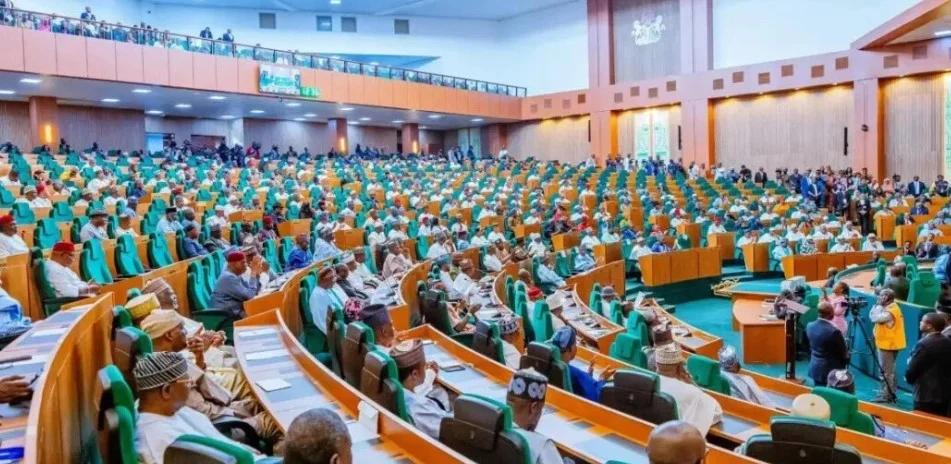
The House of Representatives has passed a bill seeking to establish the State Security Service Research and Development Bureau, a specialised institution designed to strengthen research, innovation and technological advancement within the Department of State Services.
The bill is expected to provide a legal framework for the bureau to coordinate intelligence research, develop indigenous security technologies and enhance the operational capabilities of the country’s domestic intelligence agency.
Presenting the report of the House Committee on National Security and Intelligence before its clause-by-clause consideration on Thursday, the Committee Chairman, Ahmed Satomi, said the proposed legislation was aimed at closing existing gaps in intelligence research and aligning the DSS with evolving global security realities.
“The legislative framework seeks to address the gap in terms of development looking at the global trajectory of security and value.
“The DSS is one agency that has kept this country moving and, in its quest to strengthen its combat operation, there is a requirement that it should have this particular institution within the Department of State Services for the sake of development, so that contemporary knowledge, in tandem with global practice, will be involved for this institution.”
According to the explanatory memorandum accompanying the bill, the proposed bureau will formulate and implement intelligence research policies, undertake both basic and applied research on intelligence-related equipment and technologies, and coordinate scientific, technological and environmental research activities within the DSS.
It will also provide “strategic direction aimed at achieving greater self-reliance in meeting Nigeria’s intelligence and security requirements by assessing operational needs and promoting indigenous research and innovation.”
The proposed law will further empower the bureau to collaborate with universities, research institutes and relevant public and private institutions in developing scientific and technological solutions to contemporary security challenges.
According to the bill, the bureau will provide scientific and technical information to the DSS and allied security agencies, initiate research into emerging intelligence threats, disseminate research findings capable of improving intelligence operations and organise specialised training in intelligence-related sciences and technology.
In addition, the bureau will be authorised to enter into agreements, memoranda of understanding and strategic partnerships with local and international institutions.
However, “all international intelligence-related collaborations and transnational research partnerships will be undertaken in consultation with the National Intelligence Agency.”
The bill also provides for the establishment of specialised research centres focusing on key areas of national security, including cyber intelligence and emerging technologies, economic intelligence and critical infrastructure protection, zonal crime analysis, geospatial and environmental security, human security and contemporary security threats.
It further recognises several existing and proposed training institutions under the DSS, including the State Services Academy, Lagos; Staff Development Centre, Kaduna; Senior Staff Development Centre, Bauchi; Counter Terrorism Centre, Bauchi; Research and Development Centre, Bauchi; Digital and Engineering Academy, Calabar; and the State Services Incubation Centre, Enugu.
The passage of the bill comes as the nation continues to confront complex security challenges ranging from terrorism and banditry to cybercrime, transnational organised crime and threats to critical national infrastructure.
Security experts have repeatedly stressed the importance of intelligence-led policing, technological innovation and indigenous research in improving the country’s capacity to prevent and respond to emerging threats.
The proposed bureau is expected to serve as the research and innovation hub of the DSS, providing scientific support for intelligence gathering, operational planning and the development of home-grown security solutions.
The bill will now be transmitted to the Senate for concurrence ahead of its transmission to the president for assent.
