

By Henry Umoru
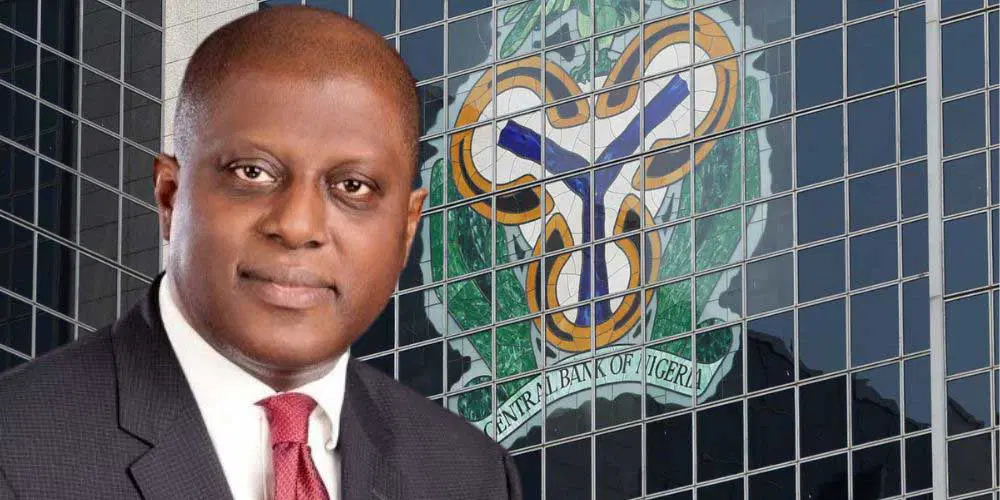
The Governor of the Central Bank of Nigeria (CBN), Olayemi Cardoso, told the Senate that the country’s external reserves stood at $52.73 billion on July 9, 2026, compared with $48.88 billion recorded in January.
Speaking on Wednesday in Abuja while appearing before the Senate Committee on Banking, Insurance and Other Financial Institutions, chaired by Senator Adetokunbo Abiru (APC, Lagos East), Cardoso said the 7.9 per cent increase in Nigeria’s external reserves reflects stronger reserve accumulation and a positive outlook for the economy.
He added that the restoration of confidence in the foreign exchange market has been a key driver of the growth in the country’s external reserves.
“Gross external reserves increased by 7.9 percent to $52.73billion as at July 9, 2026, from $48.88billion in January 2026, while net external reserves rose by 900 percent to over $40billion which was $3.99billion in 2023.”
According to the CBN Governor, the nation’s economy generally has very positive outlook for the second half of 2026 not withstanding persistent uncertainties as inflation is expected to continue its gradual moderation, supported by tight monetary conditions, improved policy coordination, greater exchange rate stability and easing supply-side pressures.
Cardoso who noted that the most significant achievement made during the period under review was the N4.65trillion mobilised from the Banking Sector Recapitalisation Programme in March this year, said, “The programme resulted in the mobilization of N4.65trillion in fresh capital, ranked as one of the most successful banking sector capital-raising exercises in Nigeria’s history.
“Notably, 72.55 percent of the capital raised originated from domestic investors, while 27.45 per cent, came from foreign investors, reflecting both strong domestic participation and growing international confidence in Nigeria’s economic prospects.”
He disclosed that 33 banks met the revised capital requirements and improving key financial soundness indicators while active engagement is ongoing with affected stakeholders to resolve the status of the few non-compliant banks in a manner that safeguards financial stability, protects depositors and ensures regulatory compliance.
According to him, inflation fell to 15.06 per cent in February 2026, prompting the Monetary Policy Committee (MPC) to reduce the Monetary Policy Rate from 27 per cent to 26.5 per cent, but rose again to 15.93 per cent in May following external shocks.
Earlier in his remarks, the Committee through its Chairman, Senator Abiru commended the CBN for maintaining exchange rate stability, improving transparency in the foreign exchange market and successfully implementing the banking recapitalisation programme.
Abiru who warned that stronger banks must do more to support productive sectors, said,”Recapitalisation should not become an end in itself. Ultimately, the true measure of a stronger banking system lies not merely in larger balance sheets but in its capacity to mobilise savings efficiently and channel affordable credit to productive sectors of the economy.”
According to him, agriculture, manufacturing, infrastructure, technology and small and medium enterprises should be the major beneficiaries of the increased capital base of banks just as he expressed concern over reports indicating moderation in private sector credit despite banks raising unprecedented capital.
At the end of the presentation, Senator Abiru announced that the committee would proceed into a closed-door session to enable lawmakers engage the CBN governor and his management team on the issues raised.
