

Unlock the White House Watch newsletter for free
Your guide to what Trump’s second term means for Washington, business and the world
Law firms that struck deals with Donald Trump are heading for a second high-stakes conflict with the US president after the government demanded their leaders sit for depositions and hand over internal communications about the deals.
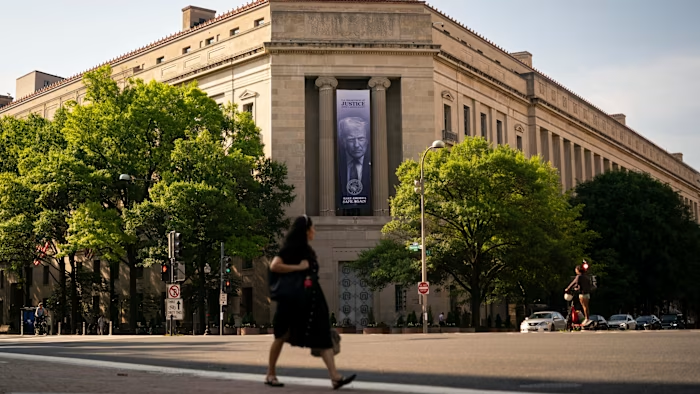
In a move that one administration insider said was designed to show a “middle finger” to the legal industry, the Department of Justice has issued subpoenas and deposition demands to the law firms it targeted or threatened with executive orders at the start of Trump’s second term.
It did so in response to requests by the American Bar Association, a membership group for lawyers, for documents about the deals in a lawsuit in which it accuses the president’s office and the DoJ of operating an unlawful “law firm intimidation policy”.
“We sent the subpoenas to the law firms to reinforce our argument that the ABA should obtain this information from its own members,” a DoJ spokesperson said.
The latest demands mark a new chapter in the administration’s fraught dealings with law firms. They reopen divisions within the legal industry that many believed had begun to fade after firms split over whether to strike agreements with the Trump administration. The decision has left some of the world’s largest law firms debating how aggressively to respond.
“There isn’t a consensus on the path forward,” said one person familiar with conversations across several firms.
“Nobody wants another fight, but nobody wants to turn over years of firm emails or have their chair deposed either.”
Some are taking advice from outside law firms on what to do.
While the DoJ has sent its demands to firms that successfully fought back against punitive executive orders last year as well as those that struck deals, they could pose a tougher dilemma for those that capitulated.
The demands focus on communications about the talks that led to the deals, meaning firms that chose to fight the administration may have less material to produce. Those that fought back have also built closer relationships after they all filed lawsuits over the executive orders.
Trump issued those orders against several firms whose lawyers had worked on investigations targeting him. The orders risked damaging the firms’ business with measures such as suspending lawyers’ security clearances and preventing them from accessing government buildings.
Some of the biggest and most powerful law firms, including Kirkland & Ellis, Paul Weiss, Skadden, Simpson Thacher, Latham & Watkins and A&O Shearman, last year struck deals in which they offered hundreds of millions of dollars in free legal services for Trump’s favoured causes and said they would roll back diversity programmes to avoid being targeted by the president.

Others — Perkins Coie, Jenner & Block, WilmerHale and Susman Godfrey — fought off the president in court after he issued potentially damaging executive orders against them.
Among law firms, there is concern about the breadth of the subpoenas and the prospect of senior leaders being forced to hand over internal communications or sit for depositions. The New York Times first reported on the DoJ’s demands.
Some firms had faced pressure from clients not to reach any fresh accommodation with the administration in response to the requests, people with knowledge of the matter said. That reflects concern that another negotiated settlement could damage firms’ reputations or raise further questions about their independence.
Lawyers say some firms are likely to seek more time and explore whether they can negotiate narrower requests with the justice department rather than simply comply with the subpoenas in full, illustrating the difficult balance between avoiding a public clash with the government and limiting their exposure.
They could seek to quash the requests or comply while asserting legal privilege over some documents.
Several lawyers told the FT they felt blindsided by the DoJ’s move and did not understand the administration’s rationale, though they wondered whether it was an attempt to get law firms to pressure the ABA to drop the case.
Some said that while they expected to face scrutiny for the deals if the Democrats were to win back control of the House of Representatives in the midterm elections in November and begin congressional investigations, they were not expecting the requests from the administration with which they struck the deals.
Although firms have fallen short of criticising the ABA after it challenged the administration’s actions, several lawyers privately questioned whether its intervention had revived an issue many firms had hoped was beginning to fade from public attention. The ABA declined to comment.
Additional reporting by Suzi Ring
