

Among the many virtues of The Pitt is the way it demonstrates the power of hospitals as dramatic settings: inherently interesting, pressure-cooker environments bringing together people from all walks of life, in various states of distress. It’s such a great series, and has resonated so strongly with audiences, that every new hospital-set drama for the foreseeable future will be judged in its shadow.
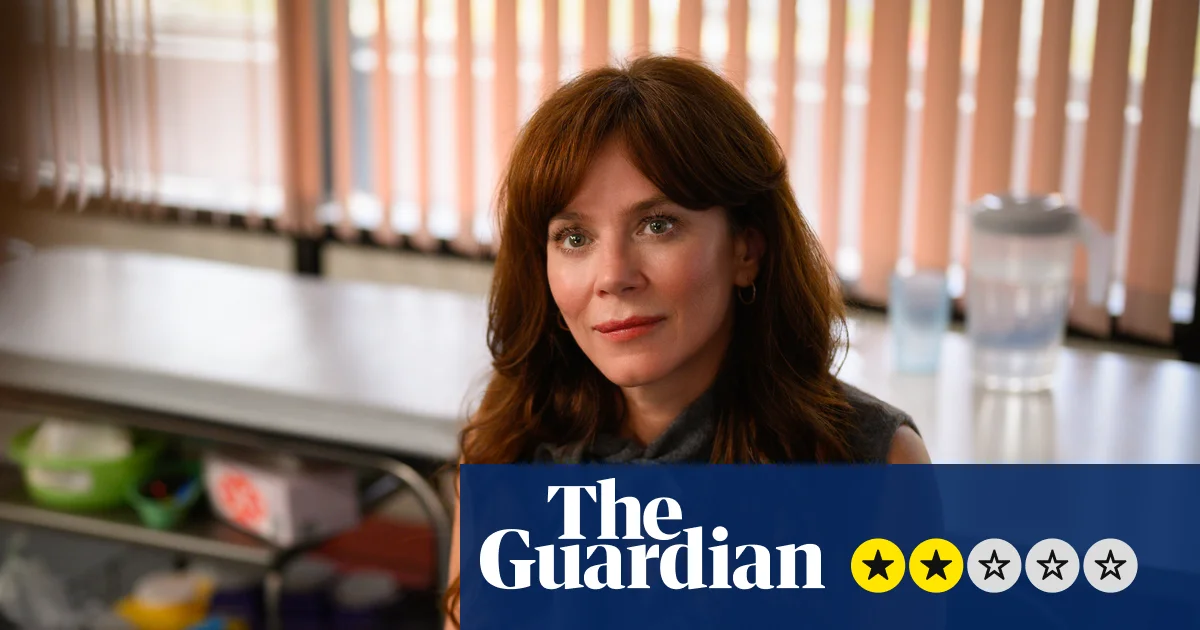
This isn’t good news for shows like Stan’s six-part series The F Ward, which looks like amateur hour by comparison, with an airy, over-lit aesthetic and a pulse that never really comes alive. Plenty of tense scenarios play out in the central setting, with some flickers of intrigue here and there, though it feels very much like a “TV hospital” – familiar looking and broadly plausible but infused with an air of unreality.
The performances are quite good, generally gathering momentum as the series progresses, though not a single character truly engaged me. This is despite the creators (Dan Edwards and Kelsey Munro, who made Stan’s Bump) and screenwriters (Munro, Shanti Gudgeon, Jack Yabsley and Nick Coyle) drawing them from an interesting premise: the narrative revolves around a group of flailing intern doctors, each having stuffed up in different ways, who are given a last chance to come good at Sydney’s underfunded Pines hospital. Because what better way to rehabilitate struggling staff than by throwing them into a super-challenging resource-starved environment?
Those interns include Jimmy (Ioane Sa’ula), who has a heart condition he’s keeping secret, which flares up during moments of stress; Ellie (Lola Bond), who previously prescribed a patient the wrong drugs, resulting in the patient’s death; Josh (Alex Fitzalan), a party boy whose father (Jeremy Sims) is a star surgeon; and former nurse Lisa (Emily Barclay). Mentor-type characters include Dr Gloria Wall (Anna Friel) and her second-in-command, Dr Curtis (Dan Wyllie).
This hospital is located just opposite the beach, because this is an Australian television production, so of course it is; coastal settings are so common one might wonder whether visions of rolling waves and golden sand are government-mandated. Hospitals situated a stone’s throw from beaches do of course exist – including Sydney’s Mona Vale hospital, which inspired the one in this show – but here the choice of location feels like one of many contrivances, in this instance engineered for postcard scenery.
With so much potential for compelling hospital-centred drama, it’s a little disappointing to see the show invest in more familiar elements, ie workplace romances and after-hours partying. There’s certainly plenty of “pass me the scalpel”-type moments, though, involving the expected elements – such as incisions and the exposure of sticky body parts. But the staging in these operating room scenes isn’t great, the camera often lingering on a torso while withholding the patient’s face, making the person under the knife feel anonymous – almost as though nobody is there.
We do encounter people outside the operating room, of course, in varying states of pain, drifting in and out of the story. During one of these encounters, in the third episode (this review encompasses all six), there’s an unexpected visual reveal of one man’s grotesquely inflamed genitals, which I think was intended to be morbidly humorous but doesn’t quite land. This is true of several moments: Jimmy’s heart condition-related episodes, for instance, are accompanied by distorted sound effects, staged in ways that feel not dissimilar to embellishments from subpar horror movies.
Some well-known Australian actors pop up in small roles here and there, including the always reliable Justin Rosniak as Luke, a patient with a bleed on the brain, and the equally excellent Alex Dimitriades as Stefan, whom Lisa and Josh meet at a bar. But none of these appearances really move the needle or leave much of an impression. Hospitals are naturally dramatic places but it’s people, not procedures, that bring these settings to life. And that’s the missing ingredient in The F Ward: genuinely compelling human stories.
