

Unlock the Editor’s Digest for free
Roula Khalaf, Editor of the FT, selects her favourite stories in this weekly newsletter.
For companies, being acquired is bittersweet. Shareholders get a premium price, but top executives tend to lose their jobs, and there’s a slight whiff of having failed to make it alone. That explains the timeless, face-saving appeal of the so-called merger of equals. The trouble is that such arrangements often feel like a booby prize for investors.
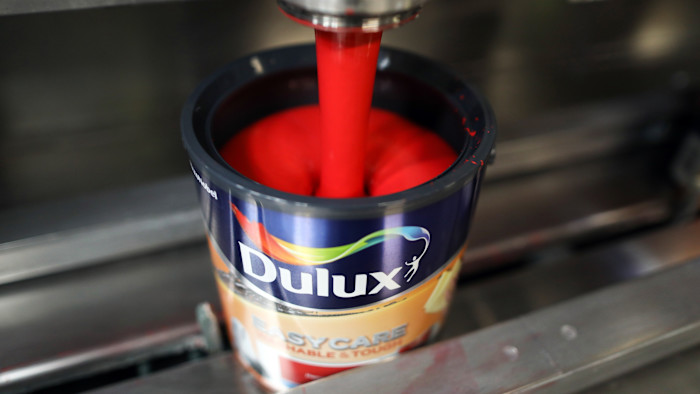
Consider the drama unfolding at AkzoNobel. Since the Dutch maker of Dulux paint announced a merger with the US’s Axalta last November, it has received a number of bids, some for the whole and some for part of it. Akzo has rebuffed them all. The latest, a €7.5bn cash offer from rival Nippon Paint, deserves a closer look.
Akzo’s €13bn enterprise value has not budged since the merger was announced, the stock instead performing roughly in line with its sector. That suggests investors do not think the Dutch company will extract blockbuster value from its planned tie-up. They are due to vote on the merger on August 5.
Meanwhile, the €7.5bn that Nippon is proposing to pay for Akzo’s paints division looks attractive. It would leave investors with a coatings business that, valued on the same multiple of 11 times ebitda as peer PPG, ought to be worth €9bn. In sum, that would leave Akzo shareholders about 30 per cent better off than they are now.
Better still, Akzo might still then get a deal of a different kind with Axalta, which itself only makes coatings. The vast majority of the expected $600mn of cost savings from the present merger would remain intact. And Akzo would still be the bigger partner of the two, entitling it to more than half of the value creation from a combination.
That makes Akzo’s opposition to apparently attractive offers a mystery. Its board may feel that the company’s current market capitalisation doesn’t reflect the value that the merger will create. Some other chemicals-themed tie-ups, such as Solstice Advanced Materials’ merger with Element Solutions and the union of Olin and Huntsman, have also received a lukewarm response.
Alternatively, this might all be a canny negotiating strategy: Akzo maybe hopes Nippon will offer more. Other paints businesses have been sold at higher ebitda multiples than that implied by the Japanese company’s bid. But it’s not obvious that playing tough is best for investors. Premiums, especially when paid in cash, are hard to brush off.
[email protected]
