

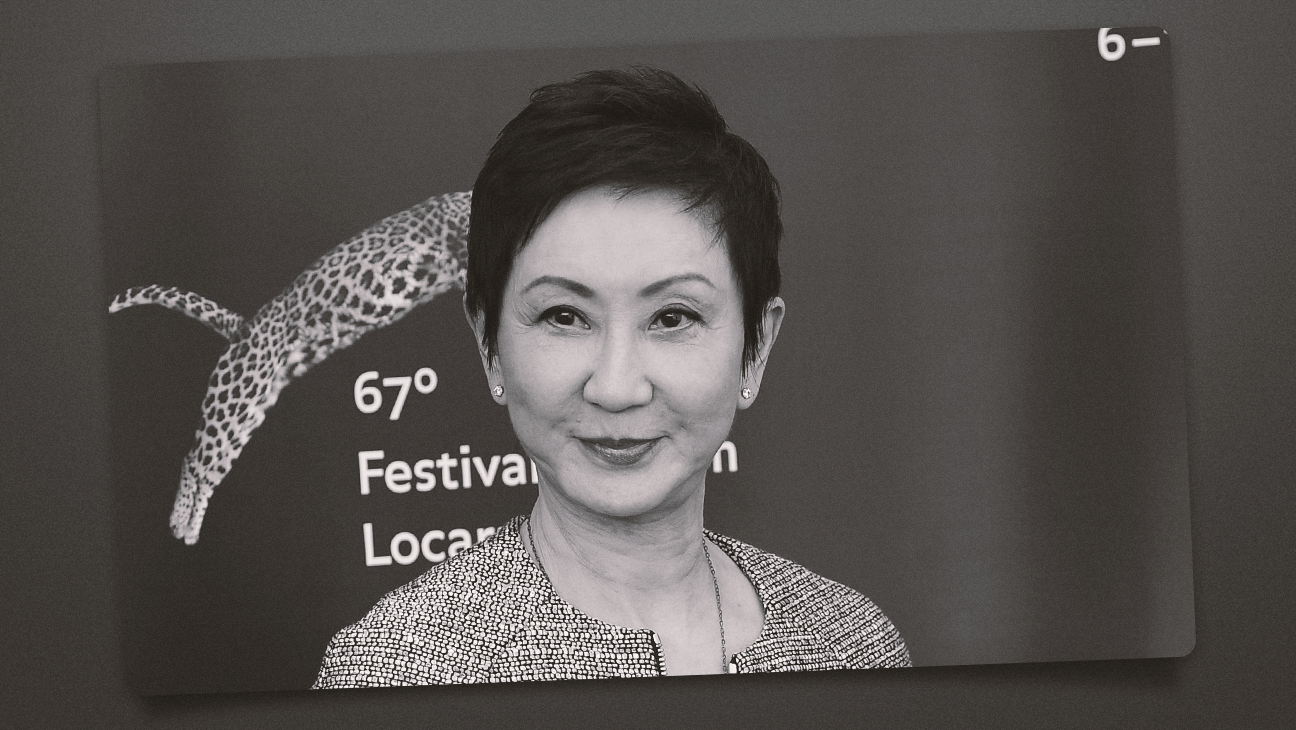
Nansun Shi, the pioneering Hong Kong producer and executive who helped shape the territory’s cinematic golden age as the co-founder of Film Workshop, and who later produced Infernal Affairs — the cult crime thriller Martin Scorsese would remake as the Oscar-winning The Departed — died Monday at Hong Kong Sanatorium & Hospital. She was 75.
Film Workshop, the production house Shi launched with director Tsui Hark in 1984, said in a statement that she had been in declining health since 2022 due to complications affecting her immune system, and that recurrent infections in recent months had resulted in “multiple organ dysfunction.” Shi died peacefully at 8:51 p.m. local time with family and loved ones at her side, the company said, adding that memorial and funeral arrangements would be announced at a later date.
Across a career spanning more than four decades, Shi ranked among the most influential figures in Hong Kong film — a key contributor to its glorious 1980s heyday, an architect of its early-2000s revival and one of the first local producers to construct genuine international distribution pipelines for Chinese-language cinema, at a time when few of her peers looked beyond the region. She was also among the earliest Hong Kong producers to shoot in mainland China, in an era when the two industries barely collaborated.
Born and educated in Hong Kong, Shi studied statistics and computing at the Polytechnic of North London before returning home to begin her career in television, working for broadcasters including TVB and Rediffusion in the mid-1970s.
Her movie career began in 1981, when she joined the upstart commercial comedy banner Cinema City as executive director, overseeing administration, financing and — crucially — overseas sales and festival strategy while Shaw Brothers and Golden Harvest still ruled the local business. Colleagues affectionately nicknamed her “Housekeeper” for the way she kept the young company’s sprawling operations in efficient order. Her credits from the period include the hit comedies Aces Go Places II and Till Death Do We Scare.
In 1984, she departed alongside Cinema City’s most ambitious young talent, Tsui Hark, to establish Film Workshop — a home for projects too idiosyncratic for their former employer’s commercial pipeline, and, in time, one of the most storied banners in Hong Kong film history. Beginning with Tsui’s Shanghai Blues (1984), its output grew to include Peking Opera Blues, A Chinese Ghost Story, the Once Upon a Time in China series and John Woo’s A Better Tomorrow (1986) and The Killer — key titles in the action canon that powered Hong Kong cinema across the globe. Shi married Tsui in 1996 and the couple divorced in 2014, but never stopped making films together.
In 2002, Media Asia chairman Peter Lam recruited Shi as vice president, and alongside Andrew Lau and John Chong, she produced Infernal Affairs, the rigorously inventive undercover-cop thriller directed by Lau and Alan Mak and starring Andy Lau and Tony Leung Chiu-wai. The film helped revitalize a then-flagging Hong Kong industry, spawned two sequels and was remade by Scorsese in 2006 as The Departed, which went on to win the best picture Oscar.
Shi’s later producing work with Beijing-based Bona Film Group included the Overheard thrillers, Derek Yee’s The Great Magician and Ann Hui’s A Simple Life, which won Venice’s 2011 best actress prize for star Deanie Ip. In 2007, she co-founded the international sales agency Distribution Workshop with Jeffrey Chan, which she ran until her death. Her later festival contenders included Flora Lau’s Bends, which bowed in Cannes’ Un Certain Regard in 2013.
Through it all, Shi kept Film Workshop running as an independent banner, producing Tsui titles including the Detective Dee films, Flying Swords of Dragon Gate and The Taking of Tiger Mountain. Her final credit came on Tsui’s Legends of the Condor Heroes: The Gallants, the Lunar New Year box office hit from 2025.
Shi served on the main competition juries of both Cannes and Berlin, and she received regular recognition from across the international film world. France named her an Officier de l’Ordre des Arts et des Lettres in 2013; Locarno presented her its Premio Raimondo Rezzonico for best independent producer in 2014; Italy’s Far East Film Festival in Udine gave her its lifetime achievement honor in 2015; the Berlinale bestowed its Berlinale Camera in 2017; and China’s Pingyao festival honored her contribution to Chinese cinema in 2019. She was also a perennial presence on The Hollywood Reporter‘s annual Most Influential Women in Global Film list.
In 2025, the Hong Kong Film Awards presented Shi and Tsui with a joint lifetime achievement award — a final shared bow for a partnership that helped define the city’s cinema across more than 40 years.
