


But the island should build durable relationships rather than depend on short-term demand; growth must be orderly and credible, with standards maintained and students properly supported, while investors need confidence that demand can be served
Cyprus is transforming its higher education sector into a cornerstone of the national economy, positioning it as a vital component of a broader investment ecosystem that extends far beyond the lecture hall. The island is leveraging its tertiary institutions to attract foreign capital, research activity and global talent.
“Higher education is becoming an important investment story, provided it is seen as part of a wider ecosystem,” Invest Cyprus chief executive officer Marios Tannousis said, underlining that the opportunity was “not only about universities”, but also about talent, research, student accommodation, services, innovation and the local economy.
A total of 57,889 tertiary level students were studying in Cyprus in the 2023/2024 academic year, a 9.4 per cent increase on the previous year, a figure Tannousis said showed the scale of activity now being generated around the sector.
That growth reaches well beyond tuition fees and connects directly with Cyprus’ broader strategy for attracting foreign direct investment, particularly in knowledge-based sectors. “For Invest Cyprus, the sector supports both investment attraction and the country’s long-term skills base,” he said.
Investor interest is strongest in credible academic institutions and accredited programmes, especially those offered in English, and a wider range of education-linked opportunities. Investor interest, Tanoussis explained, begins from here but widens to include foreign university partnerships, joint programmes, medical and health education, business schools, research centres, innovation hubs and education-related services.
Student accommodation, he added, is also becoming a more important part of the investment conversation, particularly near campuses and in cities with growing student populations. “The common factor is whether the project is properly regulated, commercially viable and linked to genuine demand,” he said, adding that investors also want to understand how each project fits with local infrastructure and employment needs.
Private universities, Tannousis said, are central to the story. They have helped give Cyprus greater international reach by attracting foreign students and offering English-language programmes in areas where demand is strong.
Cyprus’ higher education sector includes public and private universities and more than 40 higher education institutions. Private universities, he added, contribute to employment, research activity, international partnerships, services and the country’s education branding abroad.
Still, he cautioned that their continued success will depend on “quality, accreditation and market relevance”, because, as he put it, reputation is built over time.
“Some graduates may maintain professional links with Cyprus or stay to work where suitable pathways exist,” he said, adding that Cyprus can compete as a smaller EU destination with an accessible environment and English-language education. However, he stressed that the priority should be “quality internationalisation, not volume alone”, so that growth remains credible.
Cyprus’ appeal as a higher education destination, he said, rests on its EU membership, English-speaking business environment, safety, quality of life and location between Europe, the Middle East, Asia and Africa.
The country already has a private university ecosystem and is familiar to many regional markets, while the cost of studying and living can compare favourably with larger destinations, depending on the city and programme.
At the same time, he said, education links naturally with growth sectors such as technology, finance, healthcare, shipping and professional services, strengthening the country’s wider proposition to investors.
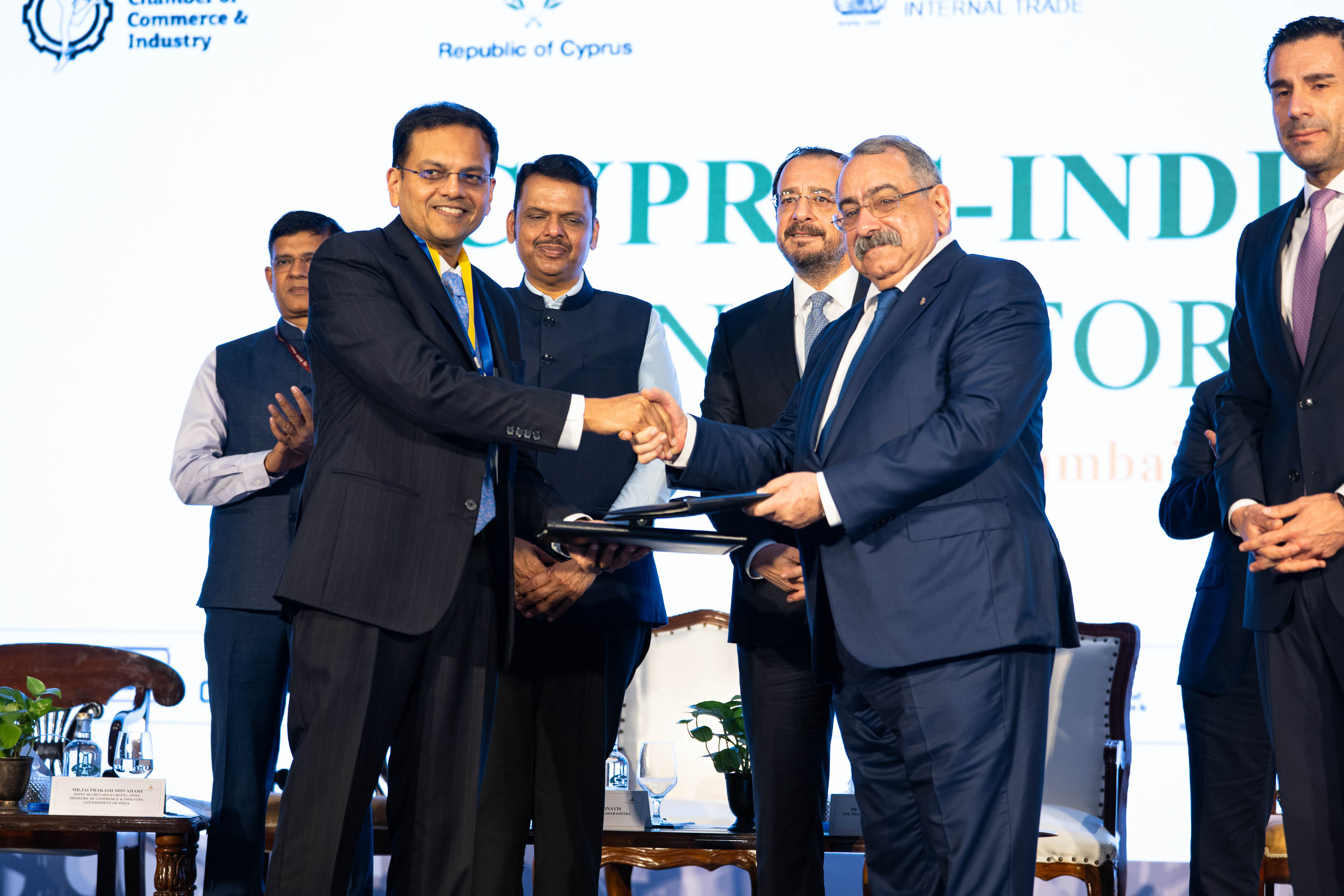
Asked which markets offer the strongest potential, Tannousis pointed to regional and international markets; the Middle East, Africa and selected European markets are all important, while India is particularly relevant given the strengthening of Cyprus-India business relations.
He also pointed to the significance of students from the US, Canada and Scandinavian countries, particularly in medical studies, saying such markets underline the importance of Cyprus’ international education profile.
“The approach should be structured and responsible,” he said, with credible recruitment, proper student support and alignment with institutional capacity. Cyprus, he added, should build durable relationships rather than depend on short-term demand.
Foreign students, meanwhile, remain an important commercial driver, but not the whole story. Tuition income matters, Tannousis explained, yet foreign students also support housing, retail, food, transport, healthcare, insurance, banking and telecoms.

Student accommodation providers, landlords, real estate companies, developers and construction firms all see demand, while cafés, restaurants, supermarkets, transport providers, telecoms companies and retailers also benefit. Healthcare, insurance, banking, payments, legal, accounting and visa-related services form part of the same value chain, he explained.
But student growth, he said, must be matched with infrastructure planning, “so communities benefit without excessive pressure”. The same logic applies to student accommodation, which Tannousis described as an increasingly visible part of the market.
Student accommodation is also becoming an investment opportunity in its own right. Purpose-built student housing, he explained, can improve the student experience and ease pressure on the wider rental market if planned correctly. Investors look at location, planning rules, transport links, affordability, management standards and occupancy prospects.
“This area needs coordination between universities, local authorities and private investors,” he said, adding that projects must reflect genuine demand.
There is also interest from foreign universities and international education groups, mainly through partnerships, joint programmes, research cooperation and specialised academic initiatives, Tannousis said.
Cyprus, he said, has long-standing international education links, including with the UK, but the opportunity is now broader and can include medical education, business programmes, technology-related studies and regional education partnerships.
Still, he stressed that any initiative must meet accreditation and quality assurance requirements, because credibility is essential for students, institutions and investors alike. “Sustainable cooperation matters more than headline announcements,” he said.

This is where Invest Cyprus comes in. Its role, Tanoussis said, is to act as a bridge between investors, institutions and public authorities. It helps interested parties understand the market, identify relevant partners and navigate procedures, including introductions to universities, research centres, professional advisers, municipalities and government bodies.
He said Invest Cyprus also communicates investor feedback where process or policy issues arise, with the aim of supporting “credible, compliant and long-term projects that add value to the economy”.
Higher education can also help Cyprus attract and retain talent, provided it is closely linked to the labour market. International students can strengthen the talent pipeline in technology, finance, healthcare, shipping, hospitality and professional services. Some graduates will leave, he said, but others may stay if suitable employment opportunities and clear pathways exist.
For international companies already operating in Cyprus, access to skilled graduates is becoming increasingly important, Tanoussis said, making higher education relevant both to foreign investment in the country and its growing sectors.
He also mentioned the role of high-calibre academics and researchers who have relocated to Cyprus, saying they contribute to the continued development of the island’s higher education, research and innovation ecosystem. This is where education begins to overlap with foreign direct investment.
The connection with research, innovation and the knowledge economy is also becoming more important. Universities and research centres, Tannousis said, are key parts of that picture. “They generate skills, applied research and ideas that can support startups, product development and business innovation”.
Investors, he explained, increasingly assess ecosystems rather than only tax or cost factors. Stronger university-business cooperation, specialised programmes and research linked to practical market needs can therefore make Cyprus more competitive as a location for knowledge-based investment. “This is where education and foreign direct investment (FDI) meet,” he said.

Tannousis also pointed out that Cyprus hosts seven of the European Union’s 35 Centres of Excellence, describing this as a particularly strong element of the country’s proposition to foreign investors.
But the opportunity, he suggested, also comes with clear conditions.
He acknowledged that investors still have concerns. These are largely practical, including housing availability, visa and entry procedures, regulatory clarity, infrastructure, quality assurance, international branding and the size of the local market. “These concerns do not undermine the opportunity,” he said, but they show where coordination is needed.
Growth, he added, must be orderly and credible, with standards maintained and students properly supported, while investors need confidence that demand can be served.
To become a stronger regional education hub, Tannousis said the country must improve its international branding, expand foreign partnerships, strengthen student housing and build closer links between universities and the labour market.
Coordination between the government, universities, Invest Cyprus and the private sector will also be important, he said, while quality assurance must remain central.
“Cyprus should position itself as a safe, accessible EU study destination connected to a growing business ecosystem,” he said, adding that the message must be supported by real capacity, consistent standards and infrastructure.
Cooperation with the education ministry is also important because policy, regulation, promotion and investor facilitation are closely connected. The ministry leads on education policy and regulation, while Invest Cyprus supports the investment dimension by helping credible investors understand the ecosystem and connect with the right authorities and partners.
Over the next five to ten years, Tanoussis said, Cyprus should aim for a more international, specialised and better-connected higher education sector. That means more foreign students, more international partnerships, more specialised programmes, more organised student accommodation and stronger links between education, research and industry.
“The opportunity is to move from growth in numbers to growth in value,” Tannousis said, adding that if the sector is developed responsibly, higher education can become a stronger pillar of Cyprus’ competitiveness.
