

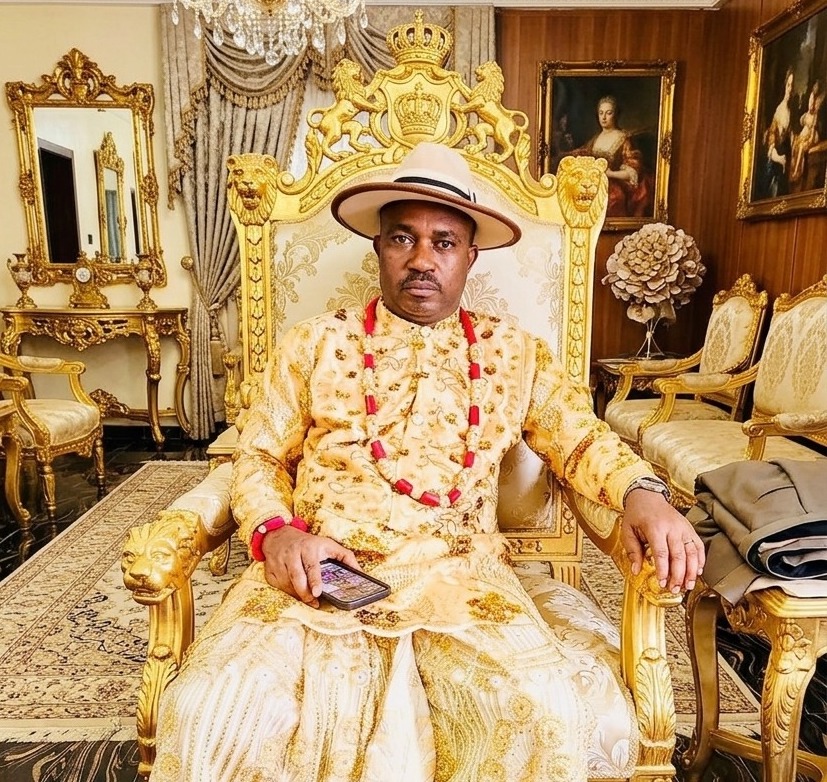
As Delta State looks ahead to the 2027 governorship election, a growing youth movement is calling for a break from traditional politics in favour of innovation-driven leadership. At the centre of that conversation is Dr. Joshua Denila, the Youth Party’s governorship candidate, whose background in technology and software innovation has made him a rallying point for many young voters seeking a new direction for the state. Bukola Lasisi writes
How a technology innovator, software entrepreneur and political newcomer became the symbol of a generational movement tipped to redefine governance in Delta State. Interestingly, this is mainly down to the resolve of the youths in the state to force a change from the old order.
For decades, Delta State has occupied a strategic position in Nigeria’s economic architecture. As one of the nation’s leading oil-producing states, blessed with abundant human and natural resources, it earned the enviable reputation of being the “Big Heart of the Nation.”
Yet, many young people across the state argue that the promise of Delta has remained largely unrealised.
Today, a growing youth movement is challenging the established political order, insisting that the time has come for a new generation of leaders to take responsibility for rebuilding the state.
Their message is direct: the future cannot be entrusted indefinitely to the same political class that has dominated governance since the state’s creation.
At the centre of this conversation stands Dr. Joshua Denila, the governorship candidate of the Youth Party for the 2027 Delta State election.
To thousands of young Deltans, Denila represents something different from the conventional political establishment. He is not a career politician. He is a technology entrepreneur, software innovator and business leader whose rise has been built largely outside the corridors of government.
For many supporters, that distinction matters.
Digital compliant governance
Across Delta’s towns and cities, from Warri to Asaba, Ughelli to Sapele, Agbor to Oleh, a common sentiment is increasingly emerging among young voters: governance must evolve to meet the realities of a digital age.
They argue that while the world is embracing artificial intelligence, data-driven governance, digital economies and technology-enabled public services, many states in Nigeria continue to struggle with basic issues of transparency, accountability, infrastructure and youth employment.
For these young advocates, the challenge is no longer merely about replacing one politician with another. It is about replacing outdated governance models with innovative solutions.
In their search for a candidate who embodies that transition, many have found a rallying point in Denila.
Tech Reputation
Long before his emergence as a governorship candidate, Joshua Denila had already established a reputation within Nigeria’s information and communications technology ecosystem.
As the Chief Executive Officer of Petrosoft Nigeria Limited, he has spent years developing digital solutions aimed at transforming operations within Nigeria’s petroleum and energy sectors.
Industry observers note that while political leaders often speak about innovation, Denila’s career has been defined by building technology products and solving practical business challenges.
His work has focused on deploying software systems that improve efficiency, transparency, accountability and automation across petroleum retail operations.
Supporters argue that this background offers a glimpse into the kind of leadership style he could bring to government, one rooted in systems thinking, measurable outcomes and technology-driven solutions.
A new era of automated fuel dispensing
Perhaps one of the most notable aspects of Denila’s professional journey is his role in pioneering software innovations designed to modernise Nigeria’s downstream petroleum sector.
Through Petrosoft Nigeria Limited, he has championed technologies that support automated fuel retail operations and digital management systems for filling stations.
Among the innovations associated with his work is the drive toward self-dispensing fuel station solutions, a model already common in many developed economies where customers purchase fuel independently using automated payment systems.
Such systems help improve efficiency, reduce waiting times, strengthen transaction transparency and enhance operational monitoring.
For supporters, this achievement demonstrates more than technological competence.
It reflects a mindset focused on identifying inefficiencies and deploying modern solutions to address them.
They argue that if similar thinking is applied to public administration, areas such as revenue collection, healthcare management, education delivery, public procurement and infrastructure monitoring could witness significant transformation.
*A candidate like no other*
In a political environment often dominated by familiar names and established power blocs, Denila’s candidacy represents a departure from tradition.
His supporters describe him as part of a generation that grew up understanding technology not as an accessory but as an essential tool for development.
They see in him a leader capable of introducing digital governance frameworks that can increase transparency and reduce bureaucratic bottlenecks.
Many of the young professionals backing his campaign envision a Delta State where government services are digitised, public spending is tracked through technology, business registration processes are simplified and young entrepreneurs have greater access to innovation-driven opportunities.
To them, Denila’s private-sector experience offers practical evidence that he understands how to build systems, manage teams and drive innovation.
The Youth Party factor
The emergence of Denila under the banner of the Youth Party has further energised many young voters.
The party has increasingly positioned itself as a platform for citizens seeking alternatives to traditional political structures.
For many young people across the Niger Delta, the Youth Party’s message resonates with their aspirations for inclusion, accountability and generational renewal.
Denila’s candidacy therefore represents more than an individual political ambition. It has become a symbol of a broader movement seeking to redefine political participation among young Nigerians.
Supporters believe that his emergence signals a shift from protest to participation, from demanding change to actively pursuing it through the democratic process.
*Reclaiming The Big Heart*
The phrase “Big Heart of the Nation” carries deep meaning for Deltans.
It evokes memories of a state blessed with extraordinary economic potential, cultural diversity and entrepreneurial energy.
Yet many young citizens believe that the state’s development trajectory has fallen short of expectations.
They point to unemployment, inadequate infrastructure, limited industrial diversification and governance challenges as evidence that new approaches are needed.
For these youths, the solution lies not merely in changing personalities but in embracing innovation.
They want leaders who understand digital economies, technological disruption, renewable energy opportunities, smart infrastructure and modern business ecosystems.
In their view, Joshua Denila embodies many of these qualities.
Road to 2027
As Delta State moves closer to the 2027 governorship election, one reality is becoming increasingly clear: the youth demographic will play a decisive role in shaping the political landscape.
Whether that translates into electoral victory remains to be seen..
What is already evident, however, is that a growing number of young people have identified a candidate they believe reflects their aspirations, values and vision for the future.
To them, Joshua Denila is more than a governorship candidate but a statement that innovation belongs in government; and a symbol of a generation determined to replace political complacency with creativity, bureaucracy with efficiency and old assumptions with new possibilities.
Most importantly, he represents the belief that the Big Heart of the Nation can beat strongly again, powered not by the politics of yesterday, but by the ideas of tomorrow.
For the growing army of young Deltans seeking a new direction, the verdict is already taking shape: Joshua Denila is the man they want.
