

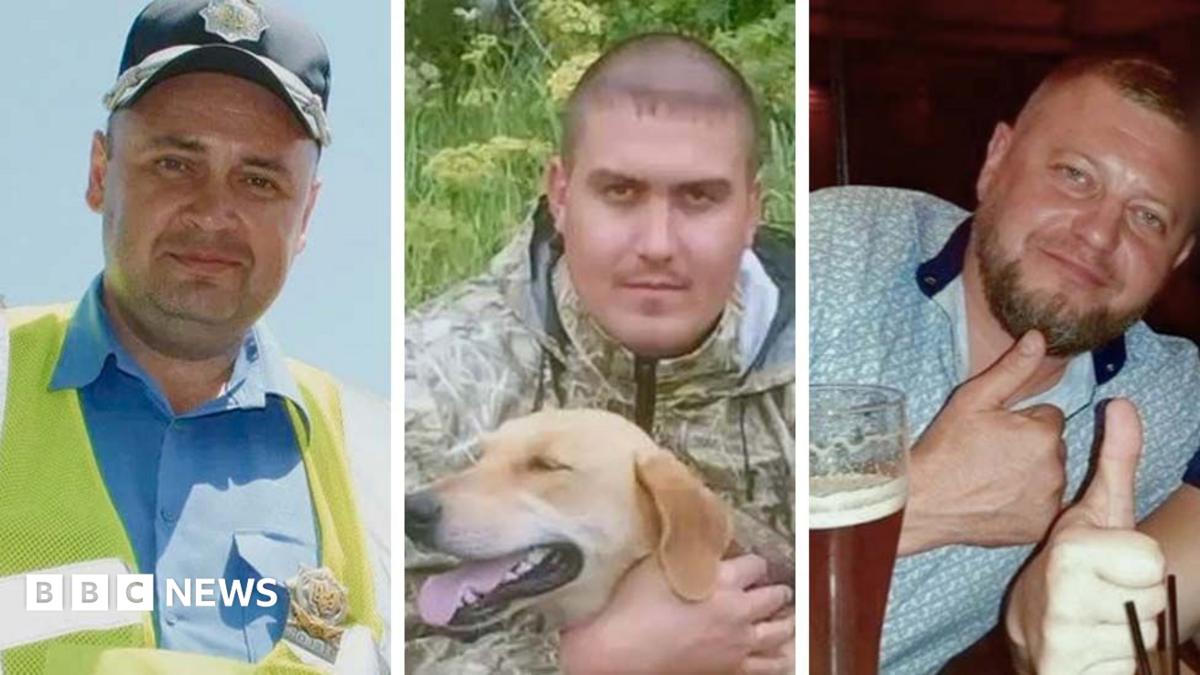
The prisons these men helped run are part of a detention system in which the UN’s human rights office (OHCHR) says the torture and ill-treatment of civilians is “systematic and widespread”.
It says former detainees describe beatings, electric shocks, mock executions and sexual violence, with civilians often detained arbitrarily and families given little information.
The Kremlin has accused the OHCHR of bias. In May this year, the UN added Russia to its blacklist of countries suspected of committing sexual violence in conflict zones – allegations Russia dismissed as “groundless lies”.
Ukrainian authorities say more than 16,000 civilians have been taken captive or disappeared. Some of these cases followed Russia’s full-scale invasion of Ukraine in 2022 – others date back as far as 2014, when Russia annexed the southern Ukrainian peninsula of Crimea and occupied parts of eastern Ukraine, triggering widespread international condemnation.
At that time, Liudmyla was working as a safety engineer on a poultry farm in Novoazovsk, a city in the Donetsk region close to the border with Russia.
Russian-backed armed groups seized the city, beginning several years of paramilitary control.
Liudmyla says that, under occupation, she helped care for orphans and took food to Ukrainian forces, who gave her a Ukrainian flag with notes of thanks written on it. She believes a photo of the flag she shared with trusted friends reached the Russian-backed forces: “This was probably why they arrested me.”
She was accused of spying, she says, and taken to Izolyatsia – a factory-turned-modern art gallery that had been taken over by Russian-backed forces. It later became widely known and feared, as numerous accounts of torture emerged from former detainees.
