

It shouldn’t have been difficult: 72 x 72. From the back seat, my daughter, newly confident in mental maths, wanted to check her answer. Whether it was because it was the end of the day, I was trying to park or something else, I stalled, cognitively speaking.
Normally, that sum wouldn’t faze me. Lately, though, I have had the sense that my brain isn’t firing on all cylinders. It’s not just maths, but a general sluggishness.
This matters to me. Not only do I write about the brain for a living, but I also work hard to keep mine healthy. I eat well, exercise and even play the trumpet, all in the hope that these things are helping.
Unlike an expanding waistline or a rise in blood pressure, however, brain health is difficult to monitor, hidden as it is behind a thick skull. But times are changing.
“I think we’re probably at the beginning of a shift toward treating brain health more like physical health – something we monitor proactively rather than reactively,” says neurologist Hedley Emsley at Lancaster University, UK.
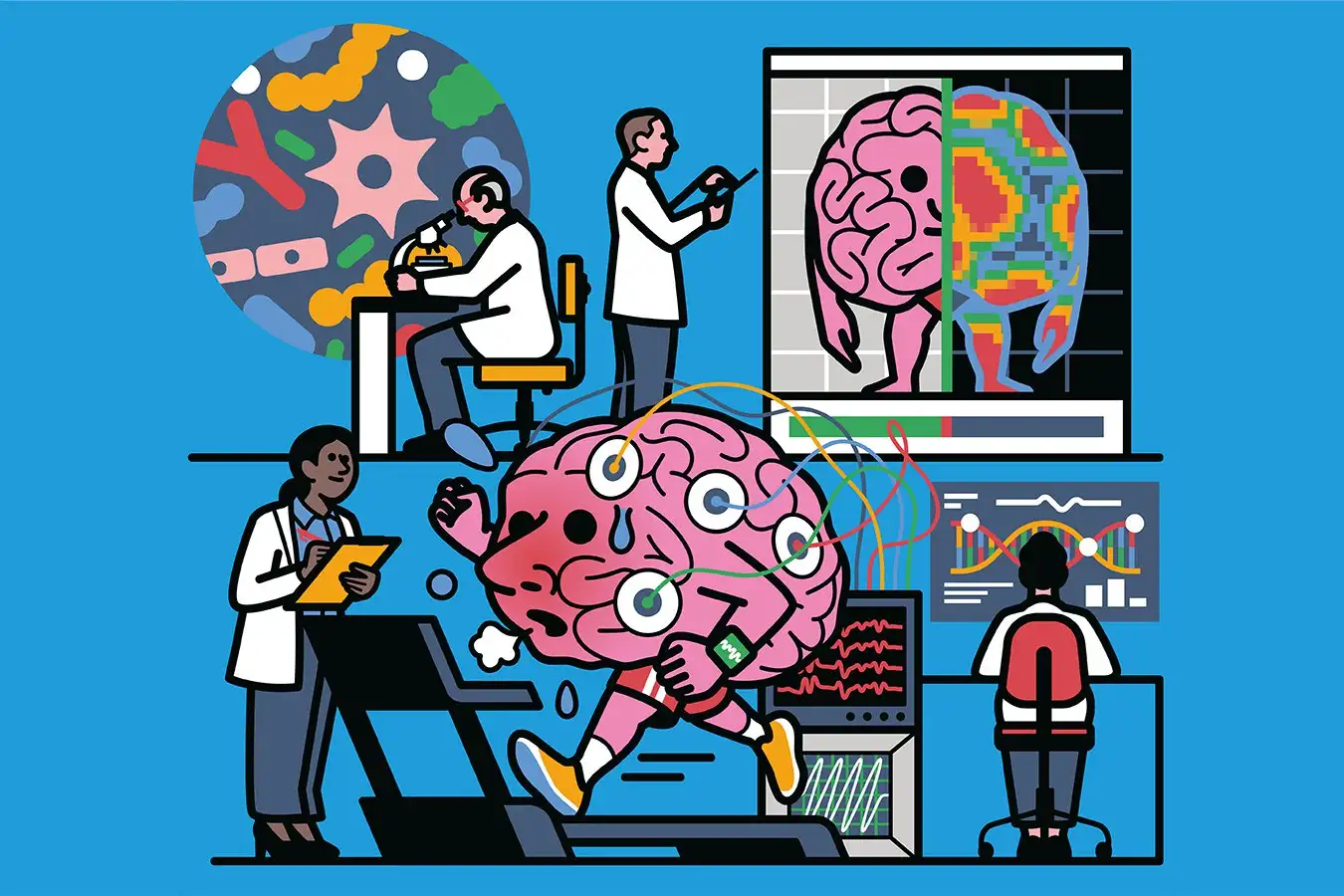
Technological advances, artificial intelligence and an obsession with personalised health data are spawning a new generation of tools that promise to give us unrivalled insights into what’s happening between our ears, and even reveal whether your brain is in good shape for your age.
So, faced with a plethora of options – from cutting-edge blood tests to expensive brain scans – I set out to discover which ones are worth it, and whether any can truly tell me if the steps I’m taking to protect my brain are working.
In the early 2000s, few people spoke about brain health. Neuroscience was more concerned with what makes a brain ill than defining what makes one thrive. Around that time, you could count the number of studies referring to brain health on both hands. Nowadays, more than 4000 studies are published on the topic each year.
Our increasing obsession with brain health
Some of that surge reflects a cultural shift. We track our steps, our sleep, our heart rate; the brain was an inevitable next step. Unease over mental health is also likely to have played a part. Around 40 per cent of US adults surveyed by Muse, a neuro-wearables company, believe they have an undiagnosed brain condition, with anxiety and depression topping the list of concerns. Given the opportunity, most people say they would take a brain health test, even if it gave information about a disease that cannot be treated or prevented.
Technology has also shifted. EEG devices that track brain activity non-invasively are cheaper than ever, and AI can now analyse, interpret and personalise brain-imaging data in real time – something that would have been impossible even five years ago. The result is a fast-growing marketplace of tools that promise to offer us insights into our brain health.

How socially connected you are is included in some definitions of brain health
Pascal Maitre/Panos Pictures
Keen to get some insights about my own brain, I decide to start with something about which I already have some information: genetic testing. I had my genes analysed more than a decade ago and discovered that I possess one copy of the APOE4 gene variant, known to increase the likelihood of Alzheimer’s disease by three to four times compared with someone without it. There are plenty of tests offering to tell you whether you have this gene variant, but whether you want to do them is another question.
My own result probably makes me consider my brain health a little more than I would otherwise, but it doesn’t give me a view on how my brain is doing right now. Plus, I also know that having a family history of Alzheimer’s or a single copy of APOE4 doesn’t make the disease inevitable. In fact, Alzheimer’s organisations in the UK and US don’t recommend these tests at all, because there are so many lifestyle factors that affect one’s ultimate risk.
A more tempting option is to get a brain scan. Imaging can reveal bleeding, tumours, shrinkage, vascular damage and other age-related changes that could potentially offer valuable information about current – and future – brain health. In fact, I already have a picture of my brain stored safely in my computer from a clinical trial I took part in. It looks beautiful, and I was lucky: it didn’t pick up any unexpected anomalies known as incidental findings.
The problem is that many people aren’t so lucky, says Rab Khan, a stroke physician at the Northern Care Alliance NHS Foundation Trust in Manchester, UK. It is estimated that incidental findings are discovered in around 4 per cent of all brain scans. Some, like small cysts or unusual blood vessel growth, won’t cause harm or explain any symptoms you have, but they can lead to anxiety, further scans and expense. In fact, none of the doctors I spoke to recommends routine brain scans. “Yearly or every-few-years scanning sounds proactive, but it is not supported as a general brain health strategy,” says Khan.
With this in mind, I decide not to go for another scan, and instead look into blood tests. Simple checks of vitamin B12, folate and thyroid function can be revealing, because deficiencies and hormone imbalances can cause memory loss and cognitive impairment. My latest test, which I got as part of a “Well Woman” package, didn’t flag anything out of the ordinary, so on that basis at least, my brain seems to be doing OK.
But those tests are a fairly blunt tool and, increasingly, there are more specialised alternatives available. Alzheimer’s blood tests, for instance, can detect levels of beta-amyloid and tau, two of the proteins that contribute to the destruction of brain tissue in the condition. Some of these tests now outperform brain scans – in certain cases, detecting tell-tale signs of disease well before symptoms occur. This is exciting, but also tricky. Although such tests are available privately, they aren’t generally recommended for people without symptoms, given their predictive value is still being investigated and treatment options remain limited.
Clues in the blood
Other experimental blood tests aim to detect inflammation in the brain. Evgeniia Lobanova at the University of Cambridge and her colleagues have been studying protein clumps called specks, released by the brain’s immune cells when they spot trouble. The specks appear to drive inflammation and cell death, and their shape and size may help distinguish people who are likely to develop Parkinson’s disease or Alzheimer’s, up to five years before symptoms show. “With this test, I can look at a patient’s blood and identify those who will very much benefit from being on a drug trial,” says Lobanova.
But such tests are a way off from being available in the clinic. In the meantime, if you have serious concerns about your brain function, you can ask your family doctor for an assessment. This can flag problems with memory, concentration and awareness of time and place. There are countless online tests, too, measuring everything from reaction speed to executive function. The trouble is that all these tests are largely designed to detect impairment. What if, like me, you aren’t concerned about identifying or eliminating a specific disease, you just want to know if your brain is in good shape?
It turns out we might already be carrying the answer on our wrist. “Researchers are increasingly interested in passive behavioural signals,” says Emsley. By this, he means signals from other areas of our body that tell us something about our brain. I wear a smart watch that tracks my sleep, physical activity and heart rate to give me the lowdown on my physical health and, increasingly, researchers think these kinds of data might offer some insight into brain health, too.

Smart watch measurements while you sleep could be a shortcut to measuring brain health
plainpicture/Lassalle, Bénédicte
Sleep is the obvious place to start. It is becoming clearer that sleep isn’t just restorative, but a highly organised state in which synchronised neural rhythms help drive waste clearance from the brain via the glymphatic system. In the long term, bad sleep may impair the removal of things like beta-amyloid and tau. “Many disorders that increase dementia risk also disrupt the brain’s sleep rhythms,” says Maiken Nedergaard at the University of Rochester Medicine in New York state.
So, perhaps these brain rhythms might tell us something about our overall brain health. In the past, you would have had to be wired up in a sleep lab overnight to get a glimpse at how your brainwaves are behaving, but we now have a proxy that is easier to measure. Your heart rate variability (HRV) is a measure of the tiny variations in time between heartbeats. HRV has been linked to several cognitive and mental health conditions. Low HRV is linked to a higher likelihood of depression, for instance, as well as dementia, schizophrenia and post-traumatic stress disorder.
A proxy for brain health
According to Nedergaard, a recent study by her and her colleagues may provide the critical link between heart rate dynamics and brain health. It shows that the pumps that propel glymphatic clearance are driven by the same mechanisms that drive HRV while we sleep. She speculates that HRV could be used as a biomarker for how well your brain is clearing its debris. Although the idea hasn’t yet been directly tested, the literature shows that low HRV predicts less favourable ageing, including an increased risk of dementia, she says.
I have always been a little concerned about my HRV, which is consistently lower than average, suggesting I spend a lot of time in a fight-or-flight state. I already use it as a nudge for being a little kinder to myself, doing things that help me de-stress. But knowing that it might also be a sign that my brain’s waste disposal system is being compromised helps me to further prioritise this – even if the evidence is still preliminary.
So far, though, all these signals remain fragmented. “The challenge is that the brain is far more complex and variable than something like heart rate, so I suspect the future will be less about a single ‘brain score’ and more about combining multiple signals over time to detect meaningful changes early – ideally in ways that are actionable rather than anxiety-inducing,” says Emsley.
But some researchers are taking on the challenge of developing a single test of brain health. One approach from 2018 attempts to combine four different MRI brain scans, each sensitive to separate brain problems, such as lesions, atrophy or white matter changes that reflect tissue damage, and boil this information down into one number, the brain health index (BHI).
Across several studies, David Dickie at the University of Glasgow, UK, and his colleagues showed that an individual’s BHI is tied more closely to reaction times (which are used as a proxy for healthy ageing as they reflect the brain’s ability to recognise, process and react to information) and scores on assessments of cognition than to individual tests of brain atrophy and disease alone. In 2023, a study led by Jodi Watt, also at the University of Glasgow, identified the BHI of almost 3000 people aged between 48 and 77, and derived a “normal” BHI curve for different ages. She and her colleagues later showed that people’s BHI reflected various factors that we know influence brain health. For instance, education seemed to improve it, whereas smoking, type 2 diabetes and hypertension all worsened it.
The tool still needs refining, but the appeal is obvious. Poor brain health is rarely caused by a single pathology. Combining various pieces of information into one score may be a more useful way of understanding how your brain health compares with what is typical.
But again, this seems to be focusing on what’s wrong, not what’s right. Part of the reason I want an insight into my brain health is because I try hard to improve aspects of my lifestyle that are meant to help it, so it would be nice to see those efforts rewarded, much like you see muscles grow or cholesterol drop.
In theory, it should all be making a difference. In 2024, the Lancet Commission on Dementia Prevention, Intervention and Care showed that almost half of all dementia cases could be prevented or delayed by addressing 14 lifestyle factors, including smoking, diabetes, physical activity, social isolation and hearing loss.
For Christin Glorioso, founder of NeuroAge Therapeutics, this report was particularly meaningful. A neuroscientist with a family history of Alzheimer’s and, like me, one copy of APOE4, she had a personal interest in knowing how to make her brain healthier. “Lifestyle is this huge, actionable piece that people can start working on,” she says. But she wanted some way of tracking it.
How old is your brain?
Glorioso and her colleagues had already shown that some people’s brains are biologically older or younger than their chronological age, based on patterns of gene activity in brain tissue. People whose brains were older than their chronological years were more likely to get Alzheimer’s or experience cognitive decline. Crucially, though, the researchers found that having a brain age five years younger than your actual age could offset the impact of having one copy of APOE4.
“So I thought, ‘OK, if the goal is to be minus five years, how do I track how old my brain is, and what’s working?’” says Glorioso. “And that’s how we came up with the NeuroAge test.”
At $1398 for the full package, which includes an MRI, genetic analysis, cognitive assessments and a consultation, NeuroAge is too expensive for me. But the cognitive assessment component, available for $9.99 a month, offers a rough estimate of brain age using tests of memory, attention, visuospatial performance and processing speed.
There are obvious limitations. The cognitive testing found that my brain age was 21 years younger than my real age, which I suspect reflected my knowledge of memory tricks, although Glorioso points out that my reaction times were also youthful, so maybe my brain is healthier than I think. Either way, the useful part may be less the number itself and more the chance to track changes over time. I can certainly see the appeal, although I’m not convinced I want to pay hundreds of dollars over the years to do so.
I also find it empowering to think that, even as I approach middle age, it isn’t too late to wind back the age of my brain. “Brain health isn’t just trying to stay on top of decline or disease, it’s about asking yourself ‘How can I make next year my best brain health year yet?’” says Lori Cook at the University of Texas at Dallas. “You need to recognise that potential for optimisation, that you can improve your brain health on an upward trajectory, no matter where you start.”
To help people do this, Cook and her colleagues launched the BrainHealth Project in 2020, with the aim of creating a more holistic measure of brain health that can be used to track improvements and identify what works and what doesn’t. The study aims to enrol up to 100,000 people over 10 years, collecting cognitive data through brain games, alongside lifestyle information and metrics such as HRV.
Cook also points out that brain health is about much more than just reaction times and memory. “We’re defining brain health not just as cognitive performance, but pulling from the World Health Organization’s definition of brain health, which includes social and emotional factors – how socially connected you are, how you manage stress and what activities you engage with.”
Participants provide data every six months and receive a composite score, but the point isn’t to check it against your age. “The score doesn’t define “normal” ranges because its purpose is not to compare people or groups,” says Cook. “It shows how an individual’s brain health can change and improve over time – it’s you against you.”
Multitasking is toxic for your brain
Around 40,000 people have already signed up, and early findings are beginning to show how interlinked certain factors are. Sleep appears hugely supportive for cognitive growth, for instance. Compassion seems to have a positive effect on cognition, not just wellbeing. Multitasking, by contrast, seems to have a toxic effect. “We think that constantly switching between things leads to chronic stress, which hinders neural function and impacts emotional regulation,” says Cook. So, no more mental maths while parking for me, then.
What Cook’s early results suggest, together with measures like the BHI, is that there’s no single, perfect way to assess brain health – at least not yet. However, over time, individual tests can together offer clues and patterns that reveal whether our brain health is heading in a positive or negative direction.
With that in mind, I will be keeping a watchful eye on the factors that are easiest to measure, including my sleep, HRV and social connections, and checking in every six months with the BrainHealth app. Together, they should be able to tell me if any changes I make are nudging my brain health in the right direction. And with any luck, the next time a calculation like 72 x 72 comes flying at me from the back seat, I will be in a better position to answer.
Topics:
