

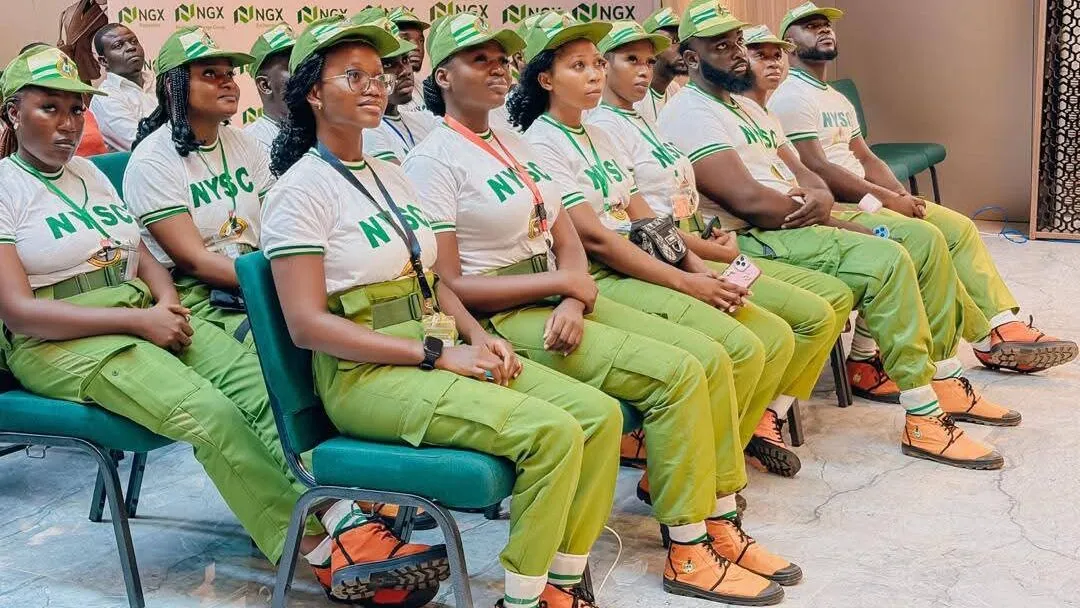
After 53 years of its existence, the National Youth Service Corps (NYSC) is to undergo a raft of operational, administrative and identity reforms, with the decision taken at the Federal Executive Council meeting last Monday. In a statement he personally signed on the policy shift, President Bola Tinubu said this is part of “creating meaningful opportunities for young Nigerians,” as part of his campaign promise to them.
The NYSC scheme, established in 1973 by the General Yakubu Gowon administration as a post-civil war mechanism for healing the wounds of the 1967-1970 fratricidal conflict, has been fostering national unity, integration and cohesion since then. Yearly, graduates of universities and other tertiary institutions are mobilised and posted to states other than their states of origin for a mandatory 12-month service.
The pioneers were 2,300 young Nigerians under the age of 30, when the country had only six universities at Ibadan, Nsukka, Zaria, Ife, Benin and Lagos. But at the last count, there are 312 universities, which are federal, state and privately owned, from which about 650,000 graduates were mobilised in 2025 for the service. The financial cost of this enterprise is staggering. Over the years, the NYSC scheme has served as a huge pool of cheap labour to many state governments and the private sector, mostly in the education, health, legal and technical sectors, and in the conduct of general elections.
Many critics would argue that its original objectives of national integration and strengthening the bonds of unity have been met. Therefore, it should be scrapped, amid the myriad challenges that have bedevilled it. But the government thinks otherwise, choosing instead to realign it with present realities.
As a result, from being a militarised mobilisation scheme, it is now to have a civilian-led leadership and serve as a national development platform, focused on skills acquisition, productivity and employability. “The ambition to build a trillion-dollar economy places renewed emphasis on productivity, skills relevant, innovation and the efficient mobilisation of human capital,” constitutes part of the government’s rationale for the policy shift.

The new structure proposes a six-week orientation camp programme, instead of the present three-week one. During the period, corps members will be taught citizenship and national values; leadership development, life skills, national cohesion, career mapping, basic accounting and financial literacy; in addition to business planning and access to financing in a two-week segmentation.
In the final two weeks, the participants will be in corps streams for specific training, such as the EducCorp, AgriCorp, MediCorp, TechCorp, LegalCorp, EntreCorp, and so forth. The deployment of corps members for primary assignments shall equally align with designated corps streams, skills, or their academic backgrounds.
A risk-sensitive approach will be adopted in posting corps members to states ravaged by insecurity or identified as flash points, according to the federal government. In such cases, priority for posting to the affected states would be for corps members who either reside in, were educated there, or are indigenes.
Conversely, those who have security concerns will be deployed to states within their geopolitical zones, or to states in proximate zones. This makes a lot of sense, as parents and corps members have for long been jettisoning such risky postings. In 2011, for instance, 10 youth corps members were killed in post-election violence in Bauchi State. Some have been kidnapped, raped to death, or killed by bandits in the waves of insurgency endemic in the country.
Unquestionably, keeping the heritage of NYSC standing deserves a revamp for better service delivery. But we believe that a much broader and all-inclusive national conversation should have preceded such a shake-up, beyond the consultations carried out, for a richer consensus and more impactful outcome. Doing so would insulate the process from the wiles and expediency of political operators. The president’s adulatory remark on the reform stresses this fact.
Energy is critical to innovation and entrepreneurship, but this is often overlooked, as public officials give direction to the advocacy. Power supply is still irregular and intolerable across the country. There cannot be better evidence of this than the presidential villa’s decision to transition to solar energy supply, following a ₦46 billion electricity bill, which it said was unsustainable. No economy anywhere driven by tech innovation, entrepreneurship and vibrant SMEs is sustained by an abysmally low electricity power base like Nigeria’s.
In 2003, Professor Attahiru Jega headed a committee on NYSC reform and submitted its report, which was the first sign of an official desire to overhaul the scheme. This is 23 years later, and those recommendations were not implemented. At a lecture he delivered to mark NYSC’s golden jubilee in 2023, Mr Jega hinted at some of the recommendations, including voluntary participation, a carefully defined qualification for members, like a minimum Cumulative Grade Point Average (CGPA) or class of degrees, and improved welfare. He charged then that, “We should learn from…best practices to reposition the NYSC for more impactful contribution to national development in decades to come.” He was spot on.
As a matter of fact, the all-comers nature of the scheme has led to racketeering, leading to the mobilisation of non-graduates into it. In 2017, the NYSC Director-General, Shuabu Ibrahim, disclosed that, “Currently, we are investigating some of such so-called graduates, many of whom cannot write or spell a word in English.” He had enlisted the assistance of the Economic and Financial Crimes Commission (EFCC) in rescuing the system from such a mess. The scam must have possibly worsened by now.
In our editorial of 22 May 2023, entitled “NYSC at 50: Repositioning for survival, better service,” we had pointed out that “Graduates sometimes wait for three years or more after graduation before they are mobilised,” which required thinking out of the box to address. We also recommended voluntary participation and highly competitive enlistment, as done in Malaysia, Israel, Taiwan and Chile, to make the system more manageable and effective.
Ironically, bloated figures of those mobilised for service get worse yearly with illegal admissions into universities. The bubble only bursts when such cohorts of graduates are not mobilised for the NYSC, as JAMB supplies universities the records of legally admitted students. Regularising this situation would require reining in errant vice-chancellors, as the former Minister of Education, Adamu Adamu, did between 2017and 2022, when he was the minister.
READ ALSO: Civilian DG, new uniforms, six-week orientation, other proposed changes to NYSC
Above all, for the NYSC to transition into a programme of proper skills tooling and innovation, there is a need to strongly address the government’s admission of its failure in education in the country. Obviously, under-funded universities and polytechnics with ill-equipped and outdated knowledge acquisition infrastructure cannot produce graduates with skill sets for the present job markets.
However, the US example shows that tech or digital innovation is basically driven by quality high school education, the type that Steve Jobs, a co-founder of Apple, Mark Zuckerberg of Facebook and Bill Gates of Microsoft leveraged to set up their multi-billion-dollar tech companies, without university degrees. To get it right, Nigeria has to fix its basic education and secondary structures, sow the seeds of the digital revolution and culture there.
Nigerians will be all ears to find out what this reform now considers as constituting our national values and leadership development indices, which the youths are to learn in the various orientation camps, and which would be impressed on them to inculcate. This is within the context of the huge void of proper leadership and values in the public space, which the youths are certainly aware of.
In addition, the no offence of certificate forgery entrenched in the 2026 Electoral Act by the National Assembly, the ₦1.3 billion in the 2026 budget for a “fake agency” that operates from the Federal Secretariat, Abuja, and runs multiple CBN accounts, which nobody is taking responsibility for, are all ethical dilemmas impacting our values system.
More so, the open rigging of political parties in their primaries last month; the sale and purchase of votes characterising our political process, all subject the so-called “Nigeria’s values” to serious scrutiny, requiring clear definition. These are all unfortunate legacies that a system seeking reformation of youth orientation through a repurposed NYSC is still bequeathing to them.
