

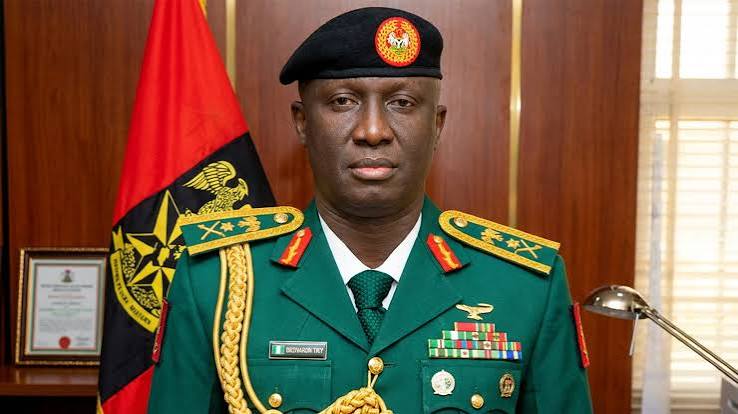
When President Bola Ahmed Tinubu appointed Lieutenant General Waidi Shaibu as the 25th Chief of Army Staff on October 30, 2025, it was a well-deserved appointment. A seasoned officer with an operational record spanning counter-insurgency campaigns against Boko Haram and ISWAP, including deployments in the Lake Chad region and Sambisa Forest, he also holds several decorations, including the Purple Heart Medal for gallantry. So upon assumption of office, he set out a clear command philosophy: to transform the Nigerian Army into a more professional, adaptable, combat-ready and resilient force capable of decisively discharging its constitutional responsibilities within a joint and multi-agency environment. Built on the pillars of professional excellence, robust administration, operational readiness, strategic cooperation and exemplary leadership, this vision has continued to shape the Army’s response to Nigeria’s evolving security challenges. Over the weekend, at a media executives’ chat on the sidelines of the 163rd Nigerian Army Day Celebration (NADCEL), moderated by Chiemelie Ezeobi, the army chief reflected on the progress made so far under his leadership, highlighting operational successes, force modernisation, troop welfare, manpower development and strengthened civil-military relations, while reaffirming the Nigerian Army’s commitment to safeguarding the nation’s sovereignty and territorial integrity
How would you assess the Nigerian Army’s performance under your leadership?
The Nigerian Army has recorded significant progress in strengthening national security, largely due to the strategic direction and sustained support of the Commander-in-Chief, President Bola Ahmed Tinubu. His leadership has provided the necessary political will, resources and policy guidance required for operational success. Since I took over as the Chief of Army Staff, the Army has demonstrated renewed vigour, resilience and clarity of purpose. Through a combination of kinetic and non-kinetic operations, we have neutralised high-value targets, dismantled criminal networks and restored stability across several parts of the country. Importantly, these efforts have also created a more secure environment for socio-economic activities to thrive.
What has been the driving force behind the Nigerian Army’s recent operational successes?
Our successes are anchored on a clear Command Philosophy focused on transforming the Nigerian Army into a professional, adaptable, combat-ready and resilient force. This has been operationalised through improved intelligence fusion, enhanced joint operations, better-equipped troops and strong leadership at all levels. Additionally, the integration of both kinetic and non-kinetic approaches has allowed us to not only neutralise threats but also address underlying drivers of insecurity. The result is a more coordinated, effective and sustainable operational outcome across all theatres.
Can you highlight key operational achievements recorded across the country?
Across all six geopolitical zones, the Nigerian Army has recorded measurable and impactful outcomes. Thousands of terrorists and criminal elements have been neutralised, many surrendered, large numbers of suspects arrested and thousands of civilians rescued from captivity.
We have also recovered significant quantities of arms, ammunition and warlike stores, thereby degrading the operational capacity of hostile groups. In addition, enhanced operations have improved security along major highways and enabled displaced communities to gradually return to their homes. These achievements reflect sustained pressure, improved coordination and growing operational efficiency.
How has logistics and equipment modernisation improved Army operations?
Logistics remains a critical enabler of operational success, and we have made substantial progress in this area. With the support of the Federal Government, the Nigerian Army has inducted modern platforms including helicopters, MRAP vehicles, armoured personnel carriers and unmanned aerial systems. These assets have significantly enhanced our mobility, protection, surveillance and strike capabilities. Furthermore, investments in communication systems and counter-drone technologies have improved command and control across theatres. This modernisation drive has made our operations more efficient, responsive and effective.
What role does indigenous capacity and local defence production play in your strategy?
Local capacity development is a key pillar of our transformation agenda. We are increasingly leveraging indigenous defence industries such as DICON for the production and refurbishment of critical equipment. This includes locally produced armoured vehicles called the Vangusher Armour Tanks and the restoration of previously unserviceable platforms. Additionally, our engineers have successfully reverse-engineered some equipment, enhancing operational sustainability. This approach not only reduces dependency on foreign procurement but also strengthens national capacity and supports economic development.
How is the Nigerian Army enhancing manpower to meet current security challenges in the country?
We have significantly scaled up our manpower generation efforts in line with the directive of the Commander-in-Chief. This has involved sustained recruitment drives and a deliberate expansion of our training capacity through the establishment of additional Depot Nigerian Army facilities across the country. Recently, the Nigerian Army successfully passed out the first set of recruits trained at the newly established Depot Nigerian Army, Amasiri in Afikpo North Local Government Area of Ebonyi State. In the same vein, another set of recruits trained at the newly established depot in Ogbomosho is set to pass out shortly. These are in addition to the large number of personnel already trained at the pioneer Depot Nigerian Army in Zaria, Kaduna State.
The simultaneous training of recruits across these three key institutions, strategically located to cover major regions of the country, has significantly enhanced our capacity to generate the manpower required to confront evolving security challenges decisively.
Beyond increasing numbers, the Nigerian Army remains firmly committed to quality. We have prioritised modern, mission-oriented training tailored to the realities of contemporary warfare. This approach ensures that our recruits are not only numerically sufficient but also professionally equipped, disciplined and combat-ready. As a result, the Army has maintained a steady pipeline of well-trained personnel capable of sustaining ongoing operations across various theatres nationwide.
We also express our profound appreciation to the President and Commander-in-Chief for his unwavering support, particularly in accelerating infrastructural development in the newly established Depot Nigerian Army, Amasiri in Afikpo North Local Government Area of Ebonyi State. This support has been instrumental in strengthening our training architecture and overall operational readiness.
You always highlight troops’ welfare as a top priority in your command philosophy, what concrete steps have you taken in this regard?
Troops’ welfare remains a cornerstone of my command philosophy, firmly anchored in our “Soldier First” approach. We recognise that morale is a decisive force multiplier in military operations. Therefore, the well-being of our personnel and their families is directly linked to operational effectiveness.
In practical terms, we have undertaken extensive barracks construction, renovation and infrastructural upgrade projects across all six geopolitical zones to improve living conditions for troops and their families. These projects span key locations including Plateau, Lagos, Lokoja, Gusau, Benin, Ibadan, Kano, Kaduna, Enugu, Port Harcourt, Sokoto, Niger, Abuja and Maiduguri. Notably, ongoing developments such as the Bola Ahmed Tinubu Barracks Phase II in Abuja are at an advanced stage and will significantly address accommodation gaps upon completion.
In addition, the Affordable Housing Ownership Option for All Soldiers (AHOOAS), introduced as a long-term housing solution, has recorded considerable progress. The pilot phase in Idu, Abuja, has delivered over 400 housing units, all currently occupied by personnel and their families. Building on this success, the scheme is being expanded to other major cities including Ibadan, Benin, Jos, Gombe and Akwa Ibom, thereby ensuring that both serving and retired personnel, especially those wounded in action, have access to decent and affordable housing at almost no cost.
Beyond accommodation, we have strengthened healthcare delivery, educational support and insurance coverage for personnel and their dependents. Under the Group Life Assurance Scheme, we have cleared outstanding backlogs, ensuring that families of fallen heroes receive their entitlements promptly. Furthermore, the Education Sponsorship Scheme has supported over 15,000 children of deceased personnel across all levels of education as of May 2026.
We have also prioritised the welfare of wounded personnel through enhanced medical care and rehabilitation support, while recent increments in pay and allowances reflect a more responsive and inclusive welfare framework.
Collectively, these initiatives are designed to improve the overall quality of life of our personnel, boost morale and reinforce their commitment to duty. Our approach underscores a fundamental principle, that every soldier is a critical national asset whose welfare must be safeguarded to sustain a professional, motivated and combat-ready force
How effective have operations been across the different theaters of operation?
Operations across the various theatres have been highly effective, with measurable gains recorded nationwide. These successes are anchored on clear strategic direction from the Commander-in-Chief and a comprehensive approach that combines both kinetic and non-kinetic lines of operation, supported by enhanced civil-military cooperation.
In the North East, operations under Operation HADIN KAI have continued to yield significant results. Through sustained offensive actions, improved force projection, and the deployment of advanced combat enablers such as Armoured Mobile Strike Groups, Special Forces and Unmanned Combat Aerial Vehicles, troops have effectively degraded insurgent capabilities. Within the period under review, 1,993 terrorists were neutralised, 2,645 suspects arrested and 1,778 civilians rescued. Additionally, large quantities of arms and ammunition were recovered, including 676 AK-47 rifles and tens of thousands of rounds of ammunition. These efforts have contributed to the stabilisation of the region and facilitated the gradual return of displaced persons to communities such as Mallam Fatori, Kukawa, and Ngoshe.
In the North West, under Operation FANSAN YAMMA, sustained intelligence-led operations have significantly curtailed banditry and terrorism. Troops neutralised 1,717 bandits, arrested 2,660 suspects, and rescued 4,052 civilians. The recovery of over 527 AK-47 rifles and more than 156,000 rounds of ammunition has further degraded the operational capacity of criminal elements and restricted their freedom of action.
In the North Central, a coordinated and multi-dimensional approach has improved security across the zone. Operations such as ENDURING PEACE, WHIRL STROKE, and SAHEL SANITY, supported by new deployments and enhanced surveillance capabilities, have strengthened operational effectiveness. Notably, improved route security along critical corridors such as the Abuja–Kaduna axis has restored public confidence. Within this period, 576 criminals were neutralised, 8,837 suspects arrested, and 2,225 civilians rescued, alongside significant arms recoveries.
In the South East, operations under Operation UDO KA have recorded notable progress in dismantling criminal networks and restoring stability. Targeted offensives have cleared key enclaves such as Orsu Forest and the Okigwe axis. A total of 219 criminals were neutralised, 1,494 arrested, and large caches of arms and improvised explosive devices recovered and safely detonated. These efforts have improved security on major routes and enabled the return of normal socio-economic activities.
In the South West, sustained patrols and intelligence-driven operations have effectively addressed kidnapping, armed robbery, and pipeline vandalism. Within the period, 13 criminals were neutralised, 1,720 suspects arrested, and 131 civilians rescued, alongside the recovery of arms and ammunition. Enhanced inter-agency collaboration has further strengthened security in the region.
Similarly, in the South South, coordinated operations with sister agencies have significantly degraded the capacity of criminal elements involved in militancy and oil theft. Troops neutralised 134 criminals, arrested 3,896 suspects, and rescued 341 civilians. Substantial recoveries of arms and ammunition have also been recorded, reinforcing the protection of critical national assets.
Across all theatres, the integration of intelligence-led operations, improved mobility, enhanced surveillance, and joint collaboration has ensured sustained operational success. These achievements have not only degraded criminal and terrorist networks but also restored public confidence, facilitated economic activities, and strengthened national security.
Overall, the Nigerian Army remains resolute in consolidating these gains and sustaining pressure on all threats to ensure lasting peace and stability across the country.
What role does civil-military cooperation play in your operations?
Civil-military cooperation is a vital component of our operational strategy. We recognise that lasting security cannot be achieved through kinetic operations alone it requires the trust and support of the people.
Accordingly, we have implemented various community engagement and intervention programmes aimed at building trust, supporting local populations and enhancing information flow. These initiatives have strengthened our relationship with communities, improved intelligence gathering and contributed to more sustainable security outcomes.
What is your message to Nigerians as the Army marks NADCEL 2026?
My message is one of assurance and collective responsibility. The Nigerian Army remains resolute in its commitment to defending the sovereignty and territorial integrity of our nation. We will continue to transform into a more professional, modern and combat-ready force capable of addressing all security challenges. However, security is a shared responsibility. We urge all Nigerians to support the Armed Forces through cooperation, unity and credible information sharing. Together, we can build a peaceful, secure and prosperous Nigeria.
